
Sunny terrace with lounge, dining table and a dark gray outdoor kitchen with a wood fire and sink
Guide · Permits

Outdoor kitchen permits in Miami-Dade

Which office reviews your plans depends on where your home is. This guide explains the basics and how we prepare your project for the permits.

01 The basics

Do you need an outdoor kitchen permit in Miami?

Whether an outdoor kitchen permit in Miami is needed, and which one, depends on what you build and where your home is. For an outdoor kitchen, the rules apply to its parts: the gas, water and drain connections, the electrical circuits, a roof or pergola over it and any structural work.

Florida law makes it unlawful to build, alter, repair or demolish a building without first obtaining a permit from the responsible enforcing agency, unless the law provides otherwise. Under the Florida Building Code, a permit from the building official is needed before a structure is built or altered and before electrical, gas, mechanical or plumbing systems are installed or altered.

Since July 1, 2026, Florida law requires local governments to exempt certain smaller jobs on single-family homes from building permits when the owner or the owner's contractor asks in writing. The exemption does not cover electrical, plumbing, structural, mechanical or gas work, or properties partly or fully in a flood hazard area. The connections of a kitchen with gas, water or power therefore remain a matter for the building department.

This guide is general information, not legal advice. Codes and procedures change, and the office responsible for your property has the final word. For every project, we prepare the documents the licensed contractor needs, and the contractor applies for the permits. The sources below were checked on September 25, 2026.

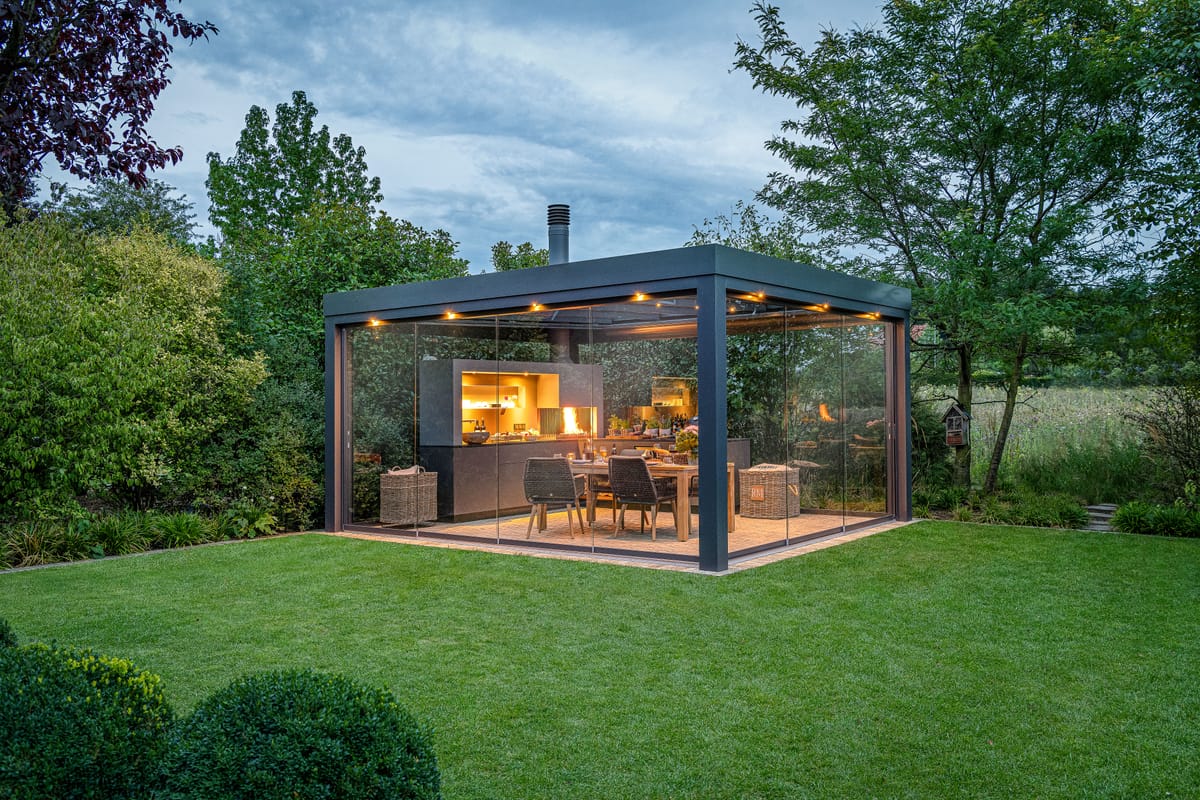
Glass-walled pergola in a garden at dusk with a lit outdoor kitchen, wood fire and dining table inside

02 Who decides

City of Miami, county or another city

Miami-Dade County is home to 34 incorporated municipalities as well as unincorporated communities. Which office handles your permit depends on where your home is:

  • City of Miami, with neighborhoods such as Coconut Grove, Morningside and Brickell. Within the City of Miami, building permits are handled by the City's Building Department, which enforces the Florida Building Code.
  • Unincorporated Miami-Dade. For unincorporated Miami-Dade, building permits are issued by Miami-Dade County's Department of Regulatory and Economic Resources; the County identifies these properties by folio numbers that start with 30.
  • Other cities. Coral Gables, Pinecrest, Key Biscayne, South Miami and Miami Beach are separate municipalities in Miami-Dade County, each with its own building official for permits.

At the start of every project, we confirm which office is responsible for your property and which additional reviews apply.

03 The review

What the review can include

Which of these reviews apply depends on your property and on what the kitchen includes.

A sand-colored kitchen unit with a sink and a warm LED light strip, a terrace and the evening sky behind it

Building, electrical, gas and plumbing

For the utilities, the county works with separate trade permits. Miami-Dade County lists pergolas and gazebos among the projects that need a permit and issues trade permits for electrical, plumbing and mechanical work. The work itself is done by licensed trades. Florida law prohibits working as a contractor without state registration or certification, and electrical contracting requires certification or registration as well. In Florida, businesses that install, service or repair LP gas systems and appliances are licensed by the Department of Agriculture and Consumer Services. Anyone can verify a Florida contractor license online with the Department of Business and Professional Regulation, by name or license number.


Covered lounge with louvered roof, sofas, round tables and a wood fire in a steel fireplace unit, dog on the sofa

A roof or pergola and the hurricane zone

This part matters when the kitchen gets a roof, a pergola or a covered lanai. Miami-Dade County lies in the High-Velocity Hurricane Zone and has the most advanced requirements of the Florida Building Code. A Miami-Dade County Notice of Acceptance (NOA) is a product approval, and products that receive one must meet the requirements of Florida's High-Velocity Hurricane Zone. Miami-Dade County's Product Control Section reviews products that protect the building envelope, mainly windows, exterior glazing, wall cladding, roofing, exterior doors, skylights, siding and shutters. In the City of Miami, all roofing work needs a building permit, and roofing materials need a Miami-Dade County Notice of Acceptance or a Florida Product Approval. In unincorporated Miami-Dade, a pergola or trellis without a roof that is not wind-resistant needs no building permit but a Zoning Improvement Permit, and other agencies may still require approvals. The FREILUFT range does not include roofs or pergolas. We plan any roof with local partners from the start.

Learn more : A roof or pergola and the hurricane zone
Wood fire in a khaki steel fireplace unit with a firewood shelf in a brick-walled lounge with white sofas

Historic properties and design review

In the City of Miami, work on a historically designated property requires a certificate of appropriateness. City staff can review repairs and minor alterations, while new construction, major additions and alterations usually need a special certificate of appropriateness reviewed by the Historic and Environmental Preservation Board. For new features such as pools, paving, decks, fences, walls or landscaping on a historic property, the City asks for a site plan, and for a tree survey when trees are removed. A certificate of appropriateness does not replace the building permit. The City of Miami's historic preservation rules are set out in Chapter 23 of the City Code, and its Historic and Environmental Preservation Board designates historic properties and monitors changes to them. Other cities run their own reviews. In Coral Gables, the Board of Architects reviews projects, including new residences, pools and paving, so that the city's architecture stays consistent with its regulations and traditional character; for a typical building permit, its approval comes before the permit is issued. In Miami Beach, work on historic structures or within historic districts needs a certificate of appropriateness from the Historic Preservation Board or Planning Department staff.

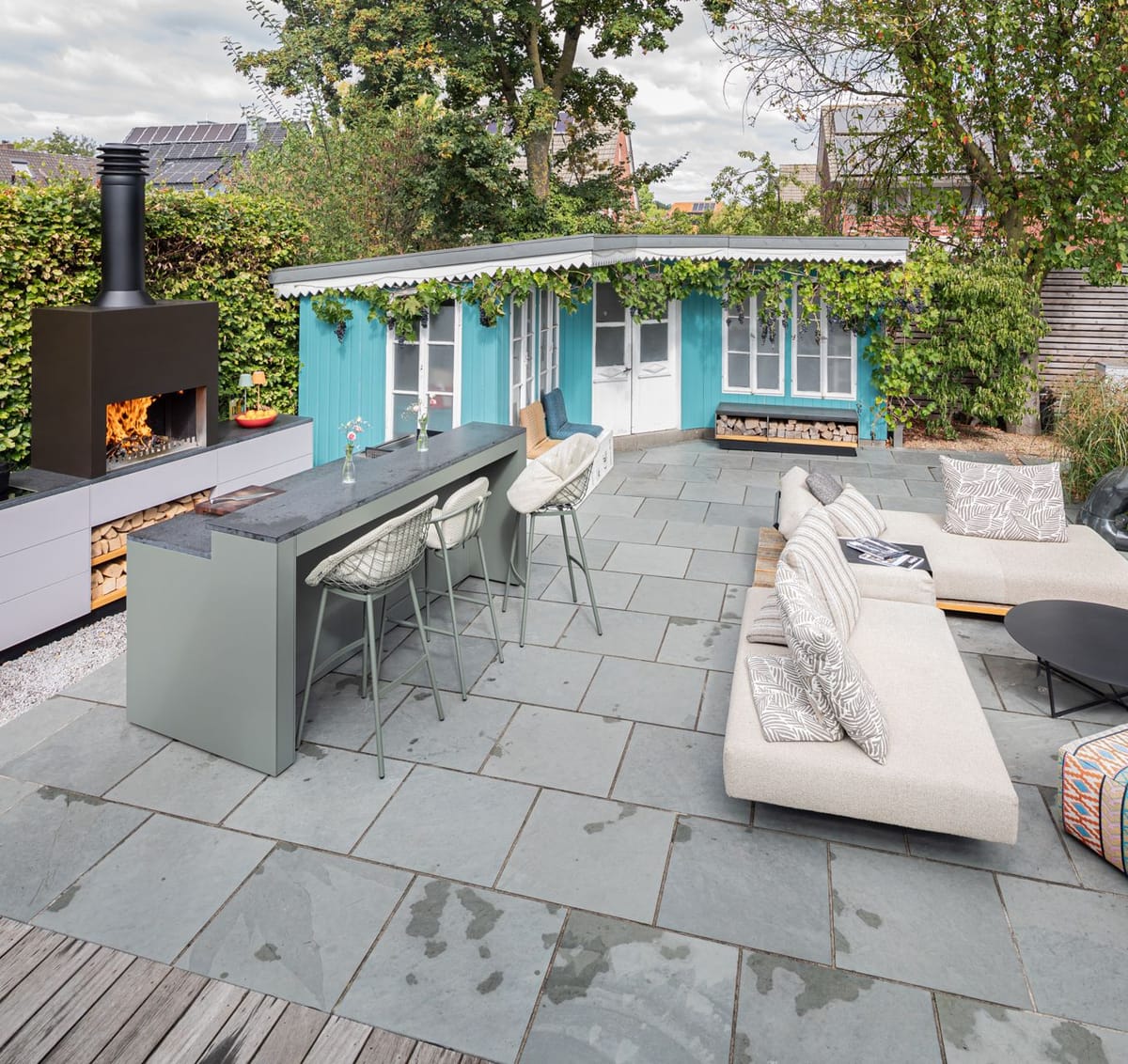
Garden patio with a wood fire under a black steel hood, light gray kitchen, green bar with stools and a lounge sofa

Zoning, setbacks and HOA rules

In the City of Miami, the Miami 21 Code sets the standards for new development, and its atlas assigns a zone to every property. Zoning can affect where on the lot a kitchen may stand. Many neighborhoods also have homeowners' association rules that apply on top of the codes, so check them early.

Beige outdoor fireplace with a firewood storage bench on a wooden deck, green lounge sofa in front of a hedge

Trees

In Miami-Dade County, removing or relocating a tree needs a permit unless the County's environmental code exempts it, and several cities, among them Miami and Coral Gables, have their own tree ordinances. In the City of Miami, removing or relocating a tree requires a tree removal permit under the City Code. In the City of Miami, work involving trees, coral rock walls or other environmental features in environmental preservation districts or scenic transportation corridors needs a certificate of approval. We plan around existing trees wherever we can.

Wooden deck over a clear natural pool with lounge chairs around a freestanding wood-burning fireplace, dog on deck

Flood zones and the waterfront

Miami-Dade County explains how to check whether a property lies in a Special Flood Hazard Area, and in flood zones, structures must be built high enough and designed to resist flood damage. Work in, on or over tidal waters, such as docks and seawalls, needs a Miami-Dade County Class I permit, also inside cities such as Miami.

04 Our process

How we prepare permits

Permits are part of the plan from the first site visit. We deliver the kitchen, set and level the cabinet modules and place the stone worktops. Foundations, anchoring and the gas, electrical and plumbing connections are made by Florida-licensed contractors engaged by you or your builder, who also apply for the permits.

  1. Find the office

    We confirm which office is responsible for your property and which reviews apply, from historic preservation to trees and flood zones.

  2. Prepare the plans

    We prepare the layout, the site plan and the product information from FREILUFT together with the design.

  3. Apply and inspect

    Our licensed partners apply for the permits and schedule the inspections.

  4. Plan before the release

    Reviews can lead to changes in the plan. Production starts once the layout drawing is approved; after that the layout can no longer be changed. We therefore plan the permit steps before the layout is released.

  5. Build when ready

    Production and installation follow the approvals, so the kitchen arrives when the site is ready.

05 Sources

Official sources

Checked on September 25, 2026. Rules and pages change, so confirm the details with the office responsible for your property. The Florida Building Code applies statewide, without separate adoption by local governments. The 8th Edition (2023) of the Florida Building Code took effect on December 31, 2023, and the Ninth (2026) Edition takes effect on December 31, 2026. We follow these changes and check them again for every project.

Questions about permits

Frequently asked questions

It depends on what you build and where your home is. Under the Florida Building Code, a permit from the building official is needed before a structure is built or altered and before electrical, gas, mechanical or plumbing systems are installed or altered. We check this for your project at the start and prepare the documents for the licensed contractor.

Plan the kitchen and the permits together

We check which office is in charge of your property and prepare the documents the licensed contractor needs for the permits.

Tell us where your home is.

Tell us where your home is and what you have in mind. We reply personally within one business day.

Step 1 of 3
  1. About you
  2. Your project
  3. Timing and scope
About you

Five digits. We use it to check whether we currently build in your area.

Request a Design Consultation