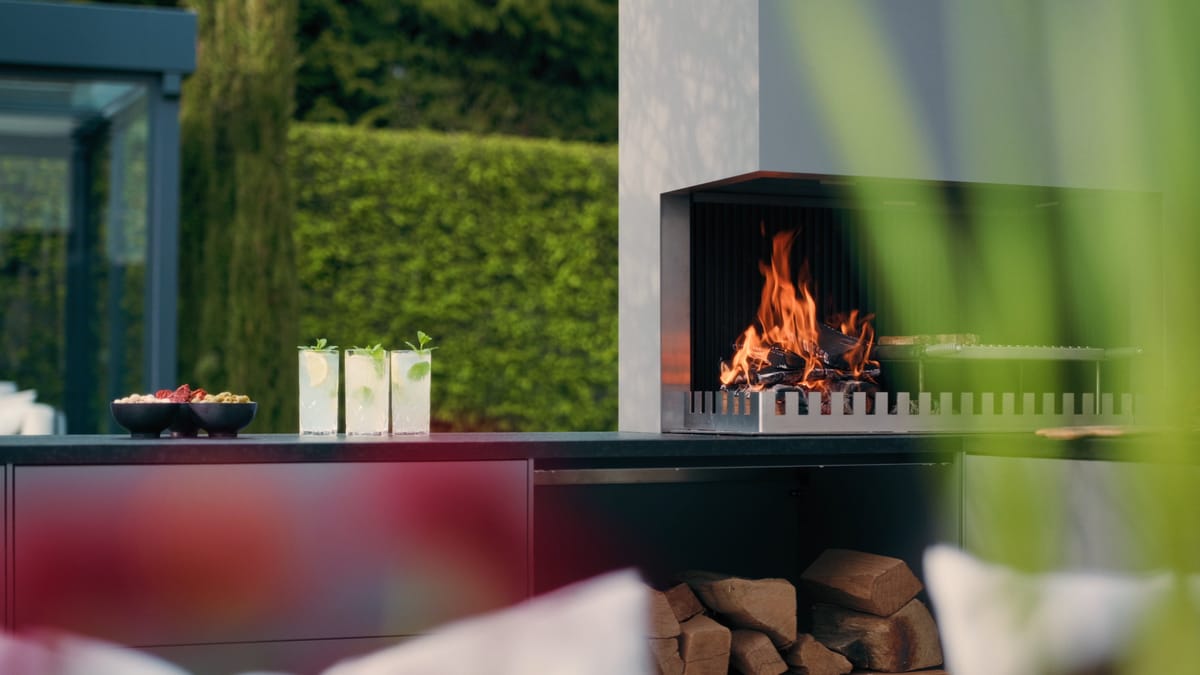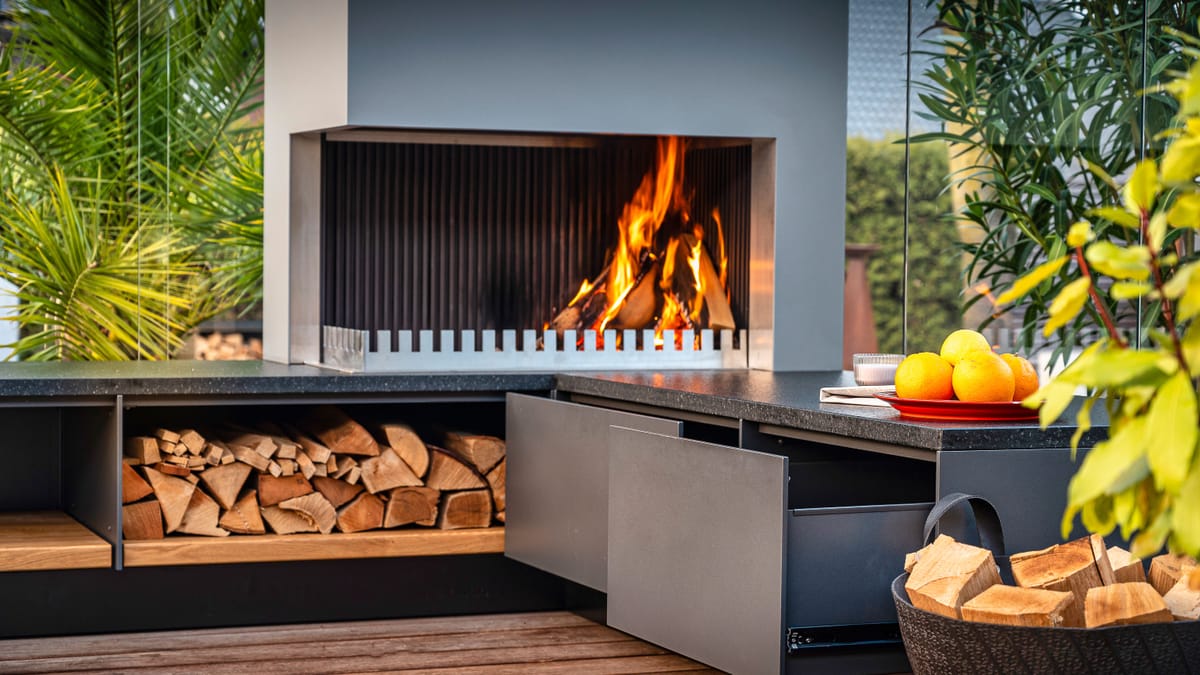
Wood fire in the grill-and-fire element, firewood in an open shelf and a gray drawer pulled open
Guide · Materials

Stainless steel vs. aluminum outdoor kitchen

Two metals, both used outdoors for good reasons. This guide compares a stainless steel outdoor kitchen with marine-grade aluminum by criteria, not by rank, for gardens near salt water and pools.

01 Criteria

Comparing a stainless steel outdoor kitchen with aluminum

Both metals are used in outdoor kitchens across Florida, and both can last near the coast when the details are right. The question is less which metal, and more which grade, which surface and how much care.

Both metals protect themselves with a thin oxide film that forms again after damage: chromium oxide on stainless steel, aluminum oxide on aluminum. Neither metal is immune to every environment.

Four things decide how either metal ages near salt water:

  • The grade or alloy. It sets how well the metal resists chlorides.
  • The surface. A smooth finish on steel, the pretreatment and coating on aluminum.
  • Washing. Rain and regular cleaning remove salt deposits; sheltered corners keep them.
  • Contact between metals. Where two different metals touch in salt air, the joint needs attention.

02 Two metals

Stainless steel and aluminum, side by side

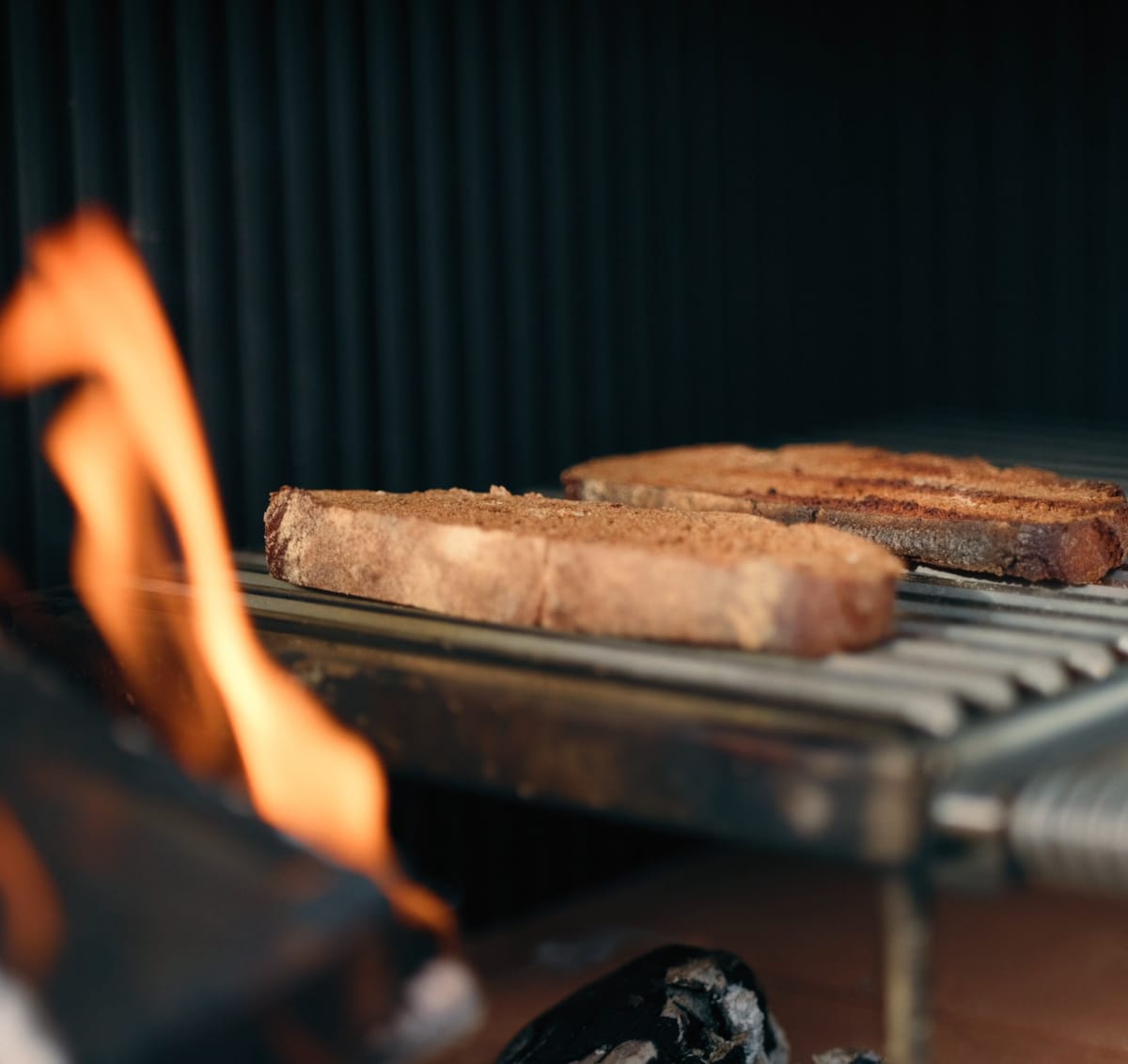
Sausages on a stainless grill grate above a burning wood fire

Where stainless steel does well

Stainless steel does well where heat and food meet. Stainless steel is common for grills, ovens, sinks and other food-contact surfaces. It resists major deformation up to about 1,000 °F, cleans with soap and water and does not alter the taste of food. In a FREILUFT kitchen, that is a grill-and-fire element built from stainless steel, cast iron and firebrick, and the sink if you choose stainless steel.
Learn more : Where stainless steel does well
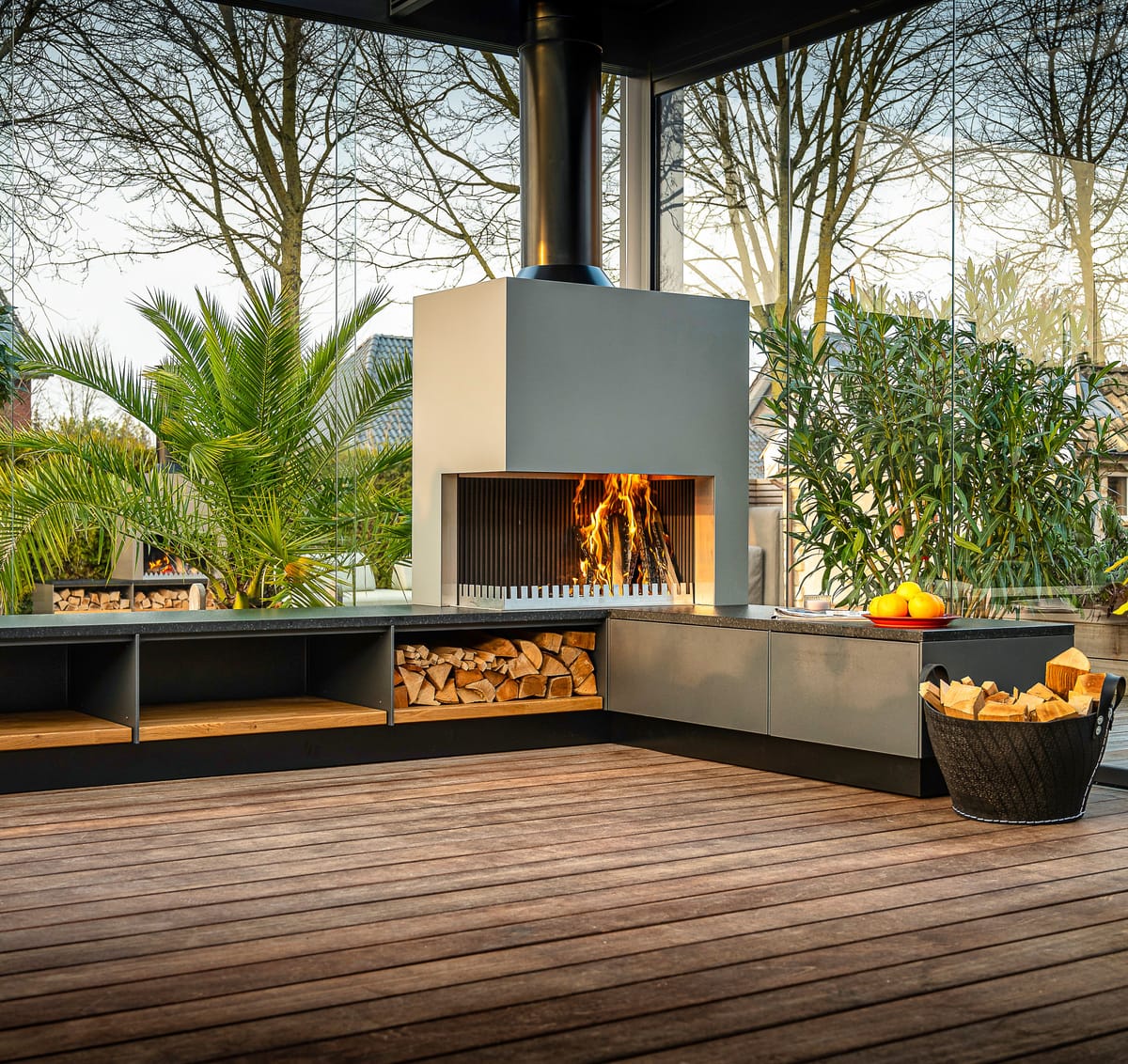
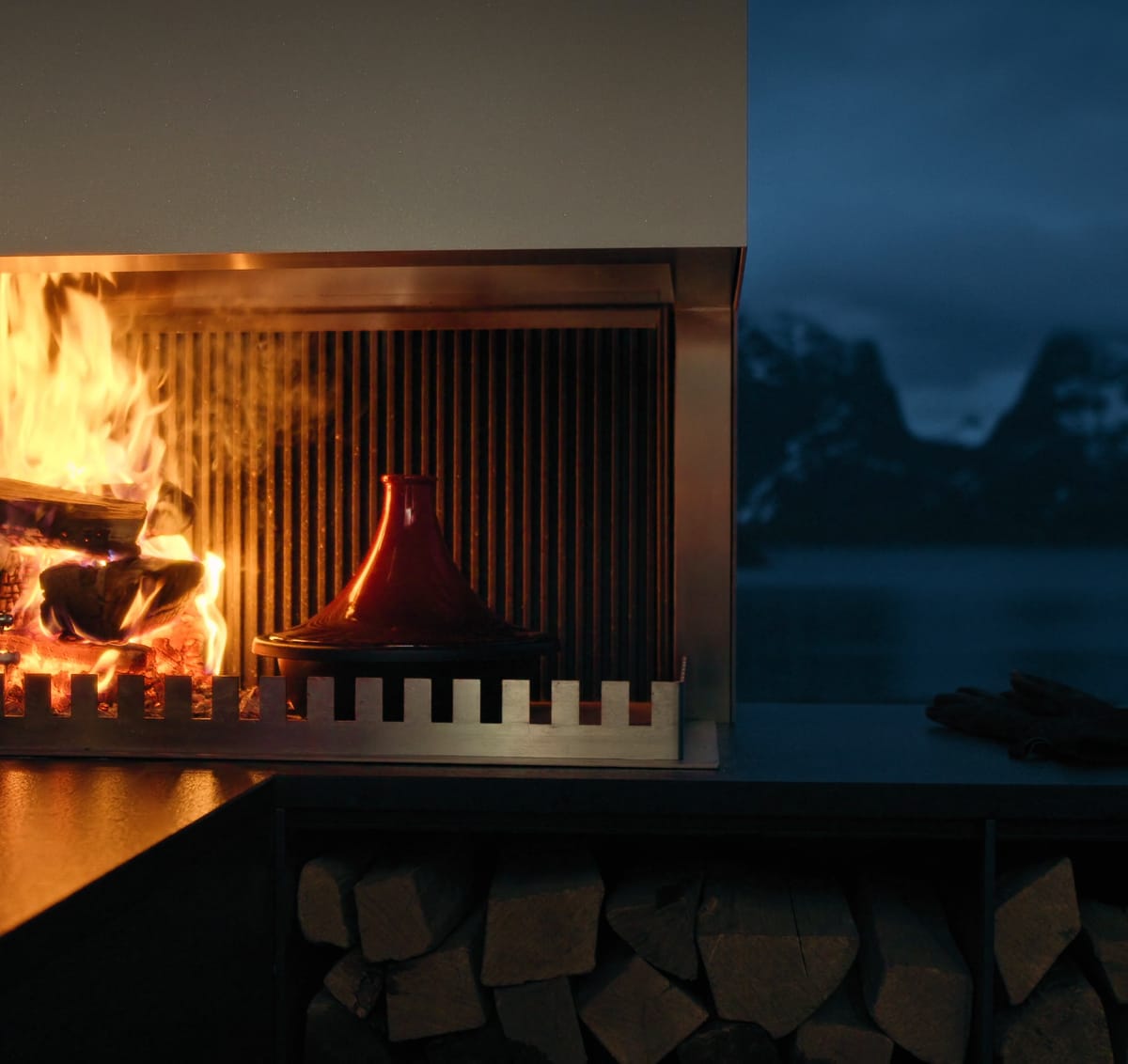
A FREILUFT grill-and-fire element with a burning wood fire and open log storage below, a fjord and snowy mountains behind it at dusk

Grades decide

Stainless steel is a family of more than 100 alloys. Two grades are common in architecture: Type 304, and Type 316, which adds 2 to 3 percent molybdenum for better resistance to chlorides.

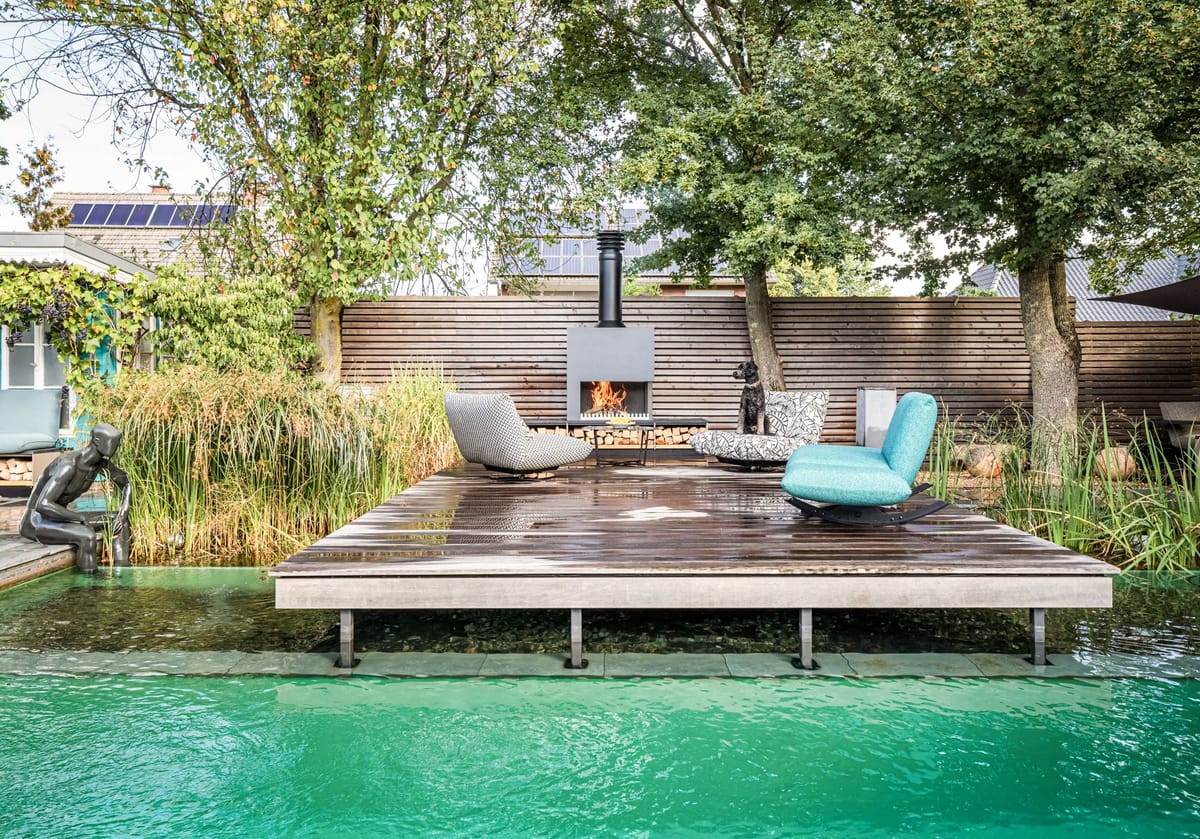
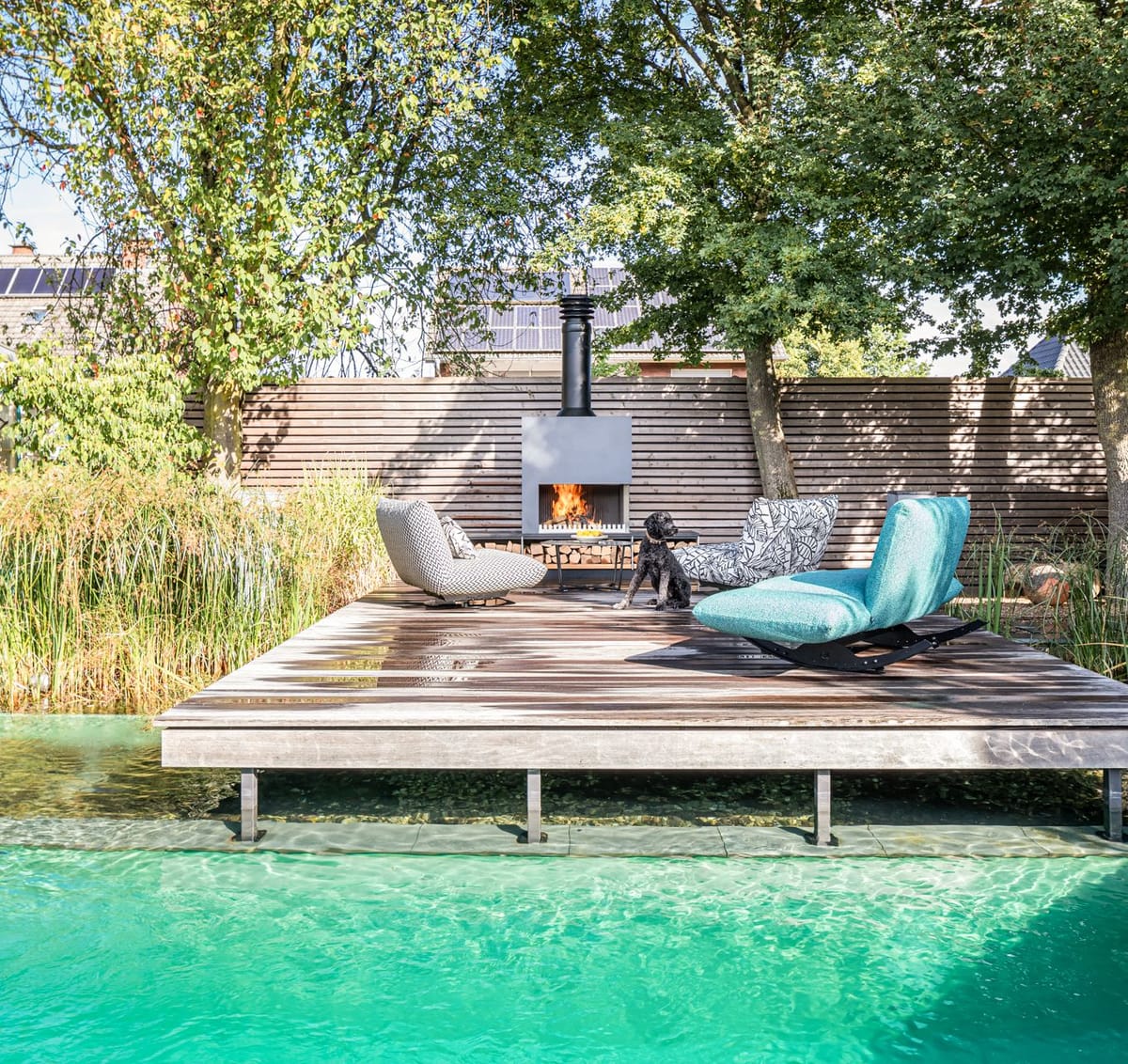
Wooden deck over a clear natural pool with lounge chairs around a freestanding wood-burning fireplace, dog on deck

Stainless steel on the coast

Within about 3 miles (5 km) of surf, industry guidance calls for Type 316 as a minimum. Lower grades such as Type 304 will probably tea-stain near the sea. Tea staining is a brown discoloration of the surface. It is cosmetic and does not weaken the steel, and it appears mostly where rain does not wash the surface.

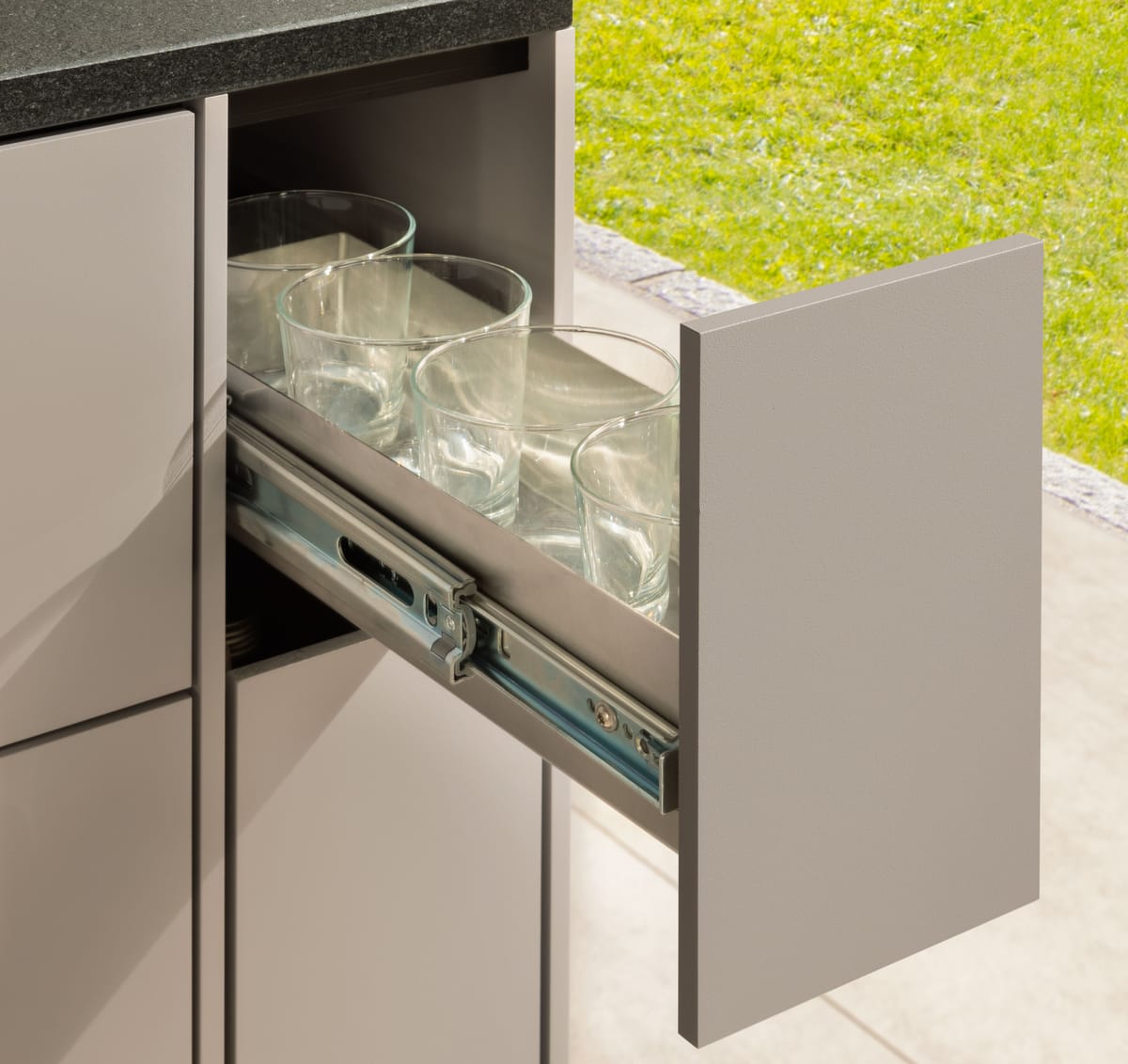
Narrow pull-out drawer with drinking glasses on full-extension runners, taupe front and black stone countertop

Marine-grade aluminum

Aluminum alloys with magnesium, the 5xxx series, resist corrosion in the marine environment and are widely used in marine applications, including hulls in constant contact with seawater. FREILUFT cabinets stand on the PureAlu Cabinetry System made from 5/16 in (8 mm) marine-grade aluminum. The alloy is marine-grade aluminum AlMg 3.5, an alloy class proven in shipbuilding.

Learn more : Marine-grade aluminum
Gray outdoor kitchen with a wood fire in the grill-and-fire element, firewood bench and a potted palm on a deck

Weight and surface

Aluminum weighs about one third as much as stainless steel: about 2.7 g/cm³, against 7.9 to 8.0 g/cm³ for Types 304 and 316. The weight of a finished module also depends on its wall thickness. Under a powder coat, the chemical pretreatment of the aluminum is essential for corrosion resistance. For salt air, the SEASIDE class of the QUALICOAT quality label asks for a deeper etch and a test for filiform corrosion. Ask every supplier which pretreatment and coating class they use.

03 On the coast

Salt air, pools and mixed metals

Near salt water, the same rules apply to both metals. These are the points that decide how a kitchen looks after years outside.

  • Natural pool with a wooden deck, lounge chairs and a freestanding wood-burning fireplace, dog on a chair, trees behind
    01 Distance to the water

    Coastal salt can attack any construction material, and coastal corrosion is concentrated within about 1,300 to 2,000 feet (400 to 600 m) of the shoreline. In much of South Florida, the water is close, whatever the material.

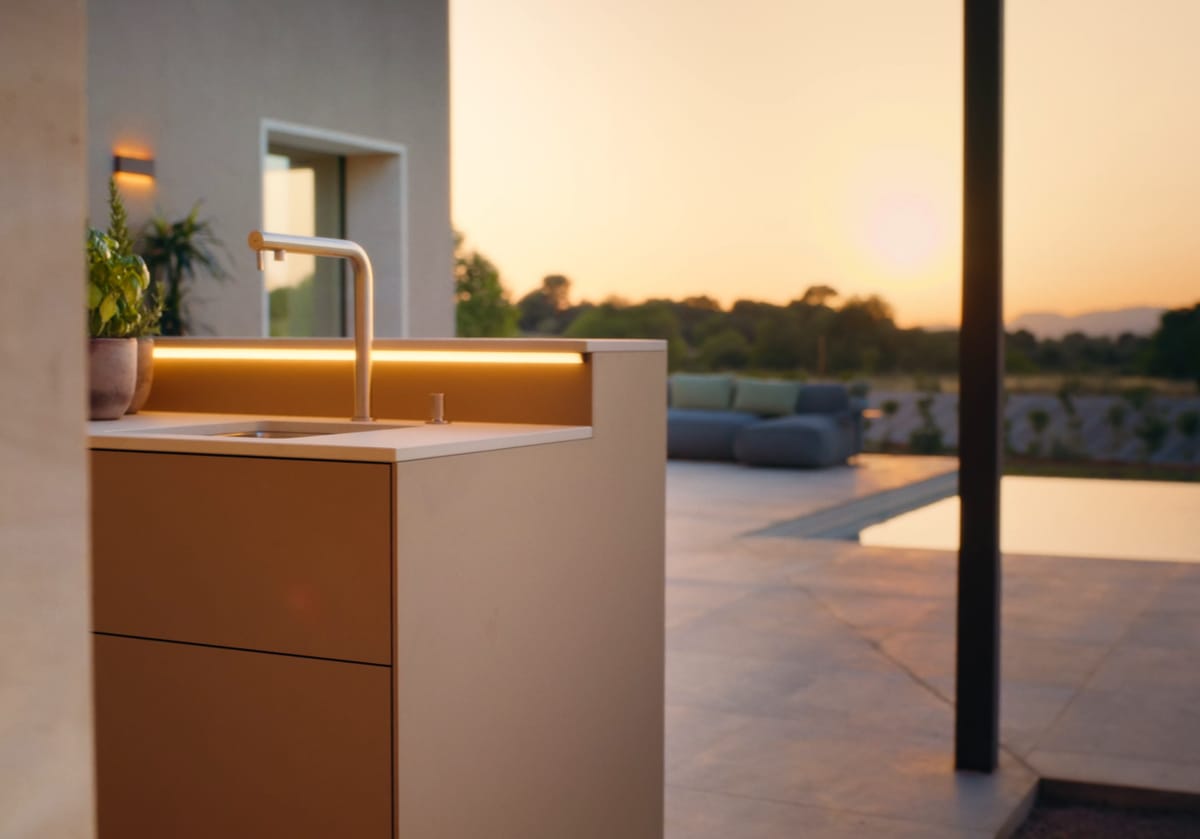
  • A sand-colored kitchen unit with a sink and a warm LED light strip, a terrace and the evening sky behind it
    02 Care for both metals

    Near the sea, industry guidance suggests washing Type 304 stainless steel 4 to 12 times a year where rain does not reach it and salt builds up, with mild detergent and clean water, never with cleaners containing chlorides or bleach. For powder-coated aluminum, QUALICOAT recommends cleaning every three months near the sea and around pools, with a soft cloth, mild detergent and a fresh-water rinse.

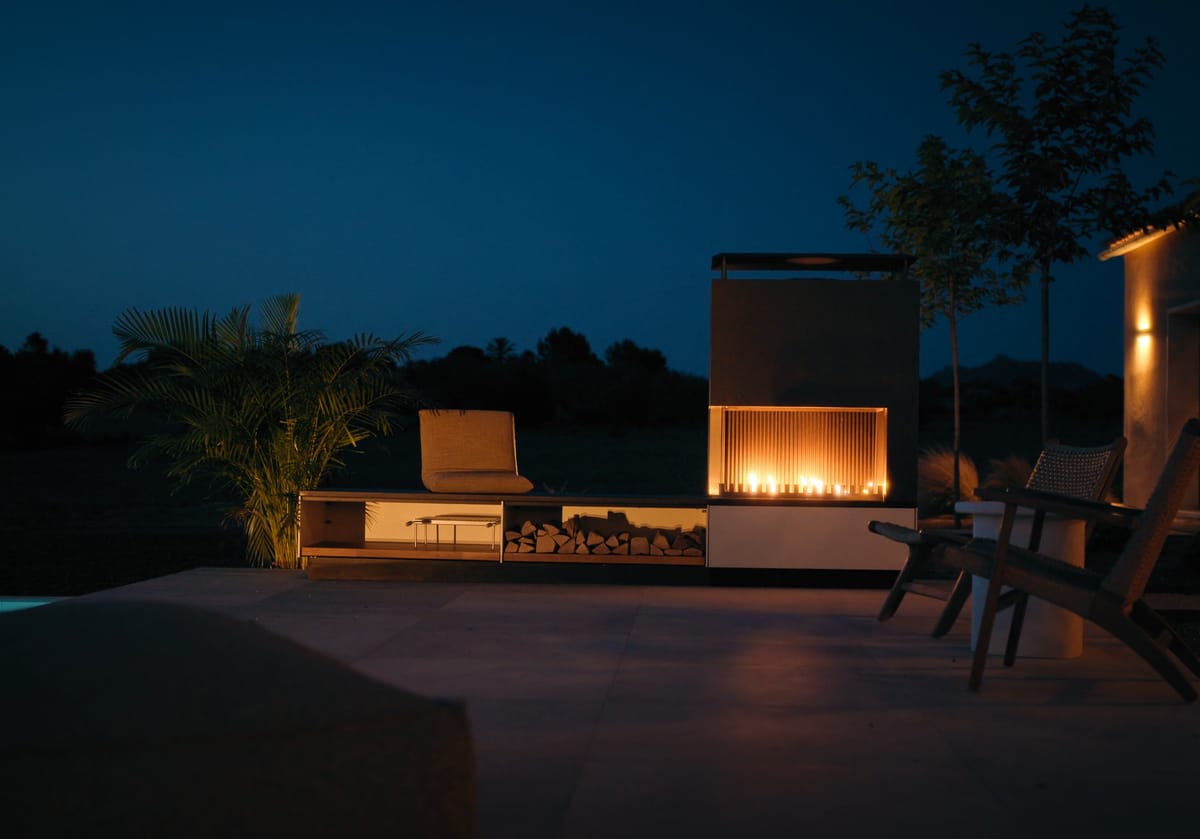
  • A fire burning in a light outdoor fireplace on a terrace beside a pool at night, lounge chairs in front of it
    03 By the pool

    Around outdoor pools, rain washes chlorides off the surfaces, so the air is much less corrosive than in indoor pool halls. An outdoor kitchen stands in the air by the pool, not in the water.

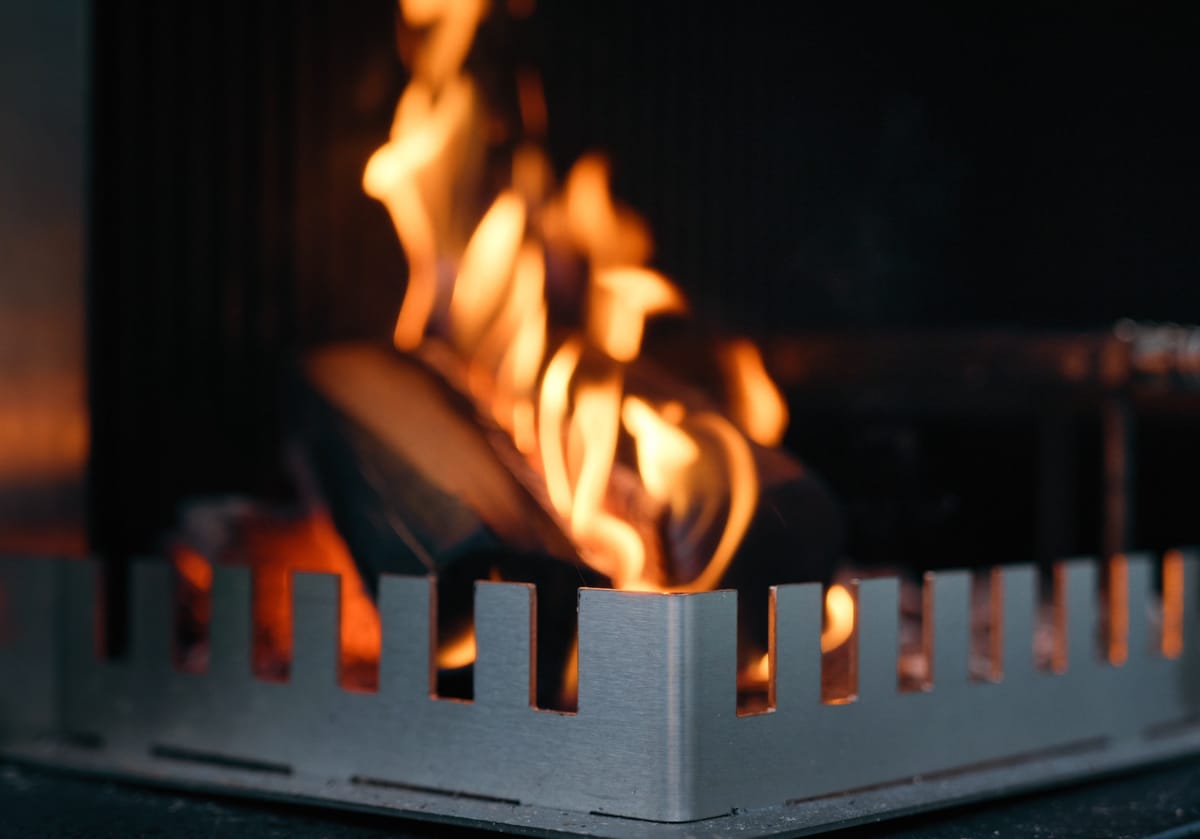
  • Close-up of a wood fire burning behind the notched steel edge of a FREILUFT grill-and-fire element at dusk
    04 Where two metals meet

    Galvanic corrosion needs two different metals in contact and a wet joint between them. Salt makes water more conductive, so near the coast it matters more where stainless steel and aluminum touch. Stainless steel screws in aluminum are common, but separating the metals with plastic or neoprene washers or sleeves prevents galvanic corrosion; paint alone is not a reliable insulator.

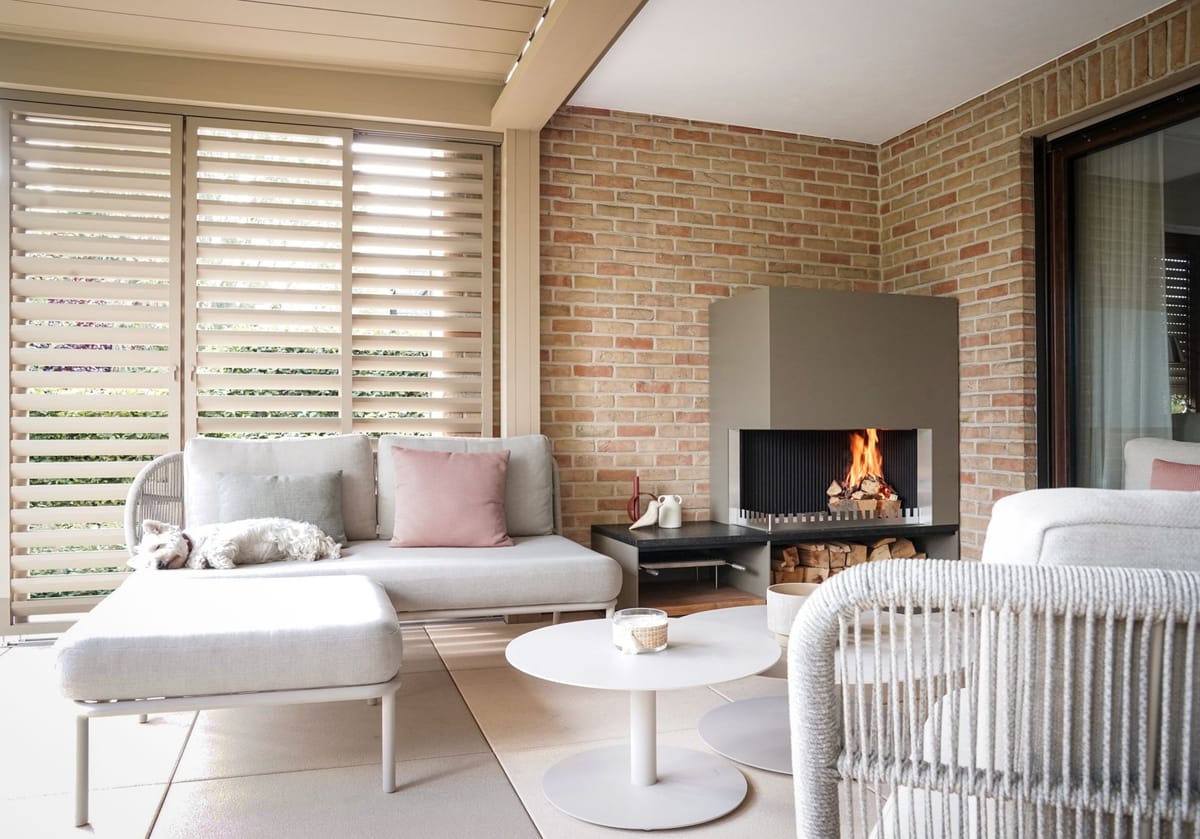
  • Covered lounge with louvered roof, sofas, round tables and a wood fire in a steel fireplace unit, dog on the sofa
    05 Sun and heat

    The U.S. Consumer Product Safety Commission warns that bare metal in direct sun can cause contact burns within seconds, even in mild weather, and that dark surfaces also get hot. Shade and the choice of color matter more than the metal itself.

04 In short

Choose by grade, surface and care, not by the name of the metal.

05 At a glance

Stainless steel and aluminum at a glance

No ranking. Each row shows what to look at for either metal and what to ask before you decide. For stone, masonry, HDPE and wood, see outdoor kitchen materials for Florida. Every FREILUFT kitchen is made to order in Germany, and we plan and supply them in South Florida.

Stainless steel Marine-grade aluminum, powder-coated
Protection A chromium oxide film; the grade decides how it holds up against chlorides. An aluminum oxide film under the coating; the pretreatment decides how the coating holds up.
Near the coast Higher grades near surf; tea staining where rain does not reach. Aluminum-magnesium alloys for marine use; pretreatment classes for salt air.
Typical use Grills, ovens, sinks, food contact Cabinet bodies and fronts
Care Regular washing near the sea, more often in sheltered spots. Regular washing near the sea and pools with mild detergent.
Ask about Grade of every part, surface finish, fasteners Alloy, thickness, pretreatment, coating, isolation from steel parts

Questions about stainless steel and aluminum

Frequently asked questions

It can be, with the right grade and care. Within about 3 miles (5 km) of surf, industry guidance calls for Type 316 as a minimum. Lower grades such as Type 304 will probably tea-stain near the sea.

Compare the metals in your hand

Ask for material samples with your design consultation. Coated aluminum, colors and stone are easier to judge in your own light.

Tell us about your site.

Tell us where your kitchen will stand, by the pool, under the lanai or on the water, and ask for material samples. We reply personally within one business day.

Step 1 of 3
  1. About you
  2. Your project
  3. Timing and scope
About you

Five digits. We use it to check whether we currently build in your area.

Request a Design Consultation