The edge of a sand-colored FREILUFT kitchen run in sunlight, wooden chairs, a tree and the sky out of focus behind it
On the estuary

Outdoor kitchens in Estero, FL

FREILUFT kitchens made to order in Germany, prepared for the Village's permit and your community's rules and installed by Florida-licensed contractors.

01 Estero

An outdoor kitchen in Estero, FL joins a young village between the river, the bay and the golf course. It is planned for the water level of your lot.

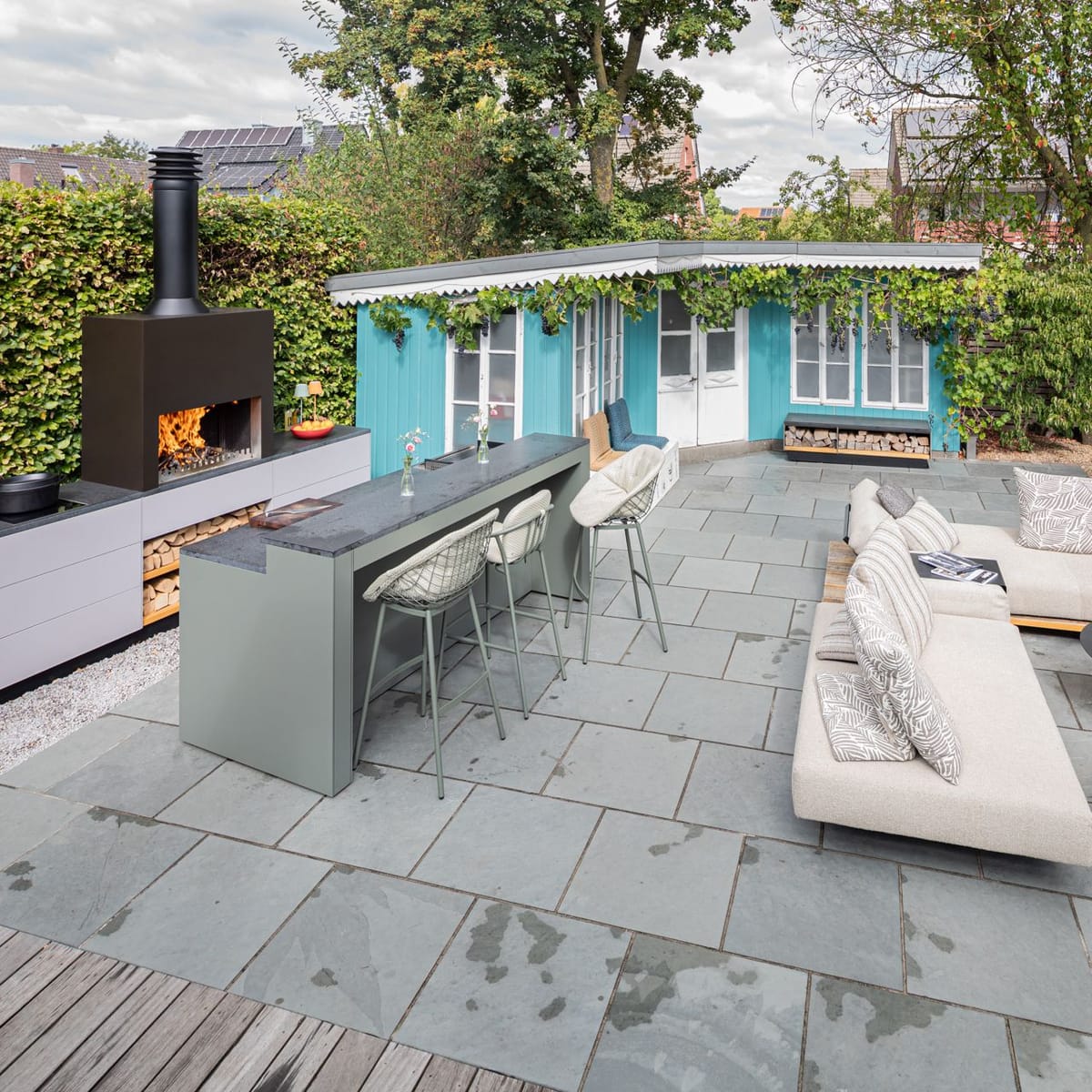
Garden patio with a wood fire under a black steel hood, light gray kitchen, green bar with stools and a lounge sofa

02 Planning

Planning an outdoor kitchen in Estero, FL

Three things shape a kitchen in Estero: the water, the wind and your community.

Much of the Village sits only a few feet above the water, and many homes are part of a community with its own guidelines. We place the kitchen on your lot with the setbacks and the flood zone in mind, prepare the documents for your community and the Village, and plan its gas, power and water connections above the design flood level.

Estero is not in Florida's High-Velocity Hurricane Zone, which the Florida Building Code limits to Broward and Miami-Dade counties. The Village's code adopts Lee County's wind map, which places Estero in the 160 mph ultimate design wind speed zone for Risk Category II buildings and shows the entire county as a wind-borne debris region. National Weather Service normals for nearby Fort Myers (1991–2020) give 57.41 inches of rain a year, with 9 to more than 10 inches in each month from June through September, when average highs reach about 90 to 92°F. Before a storm, the Village of Estero asks residents to anchor or store yard furniture, grills, planters and trash bins. FREILUFT cabinets use 5/16 in (8 mm) marine-grade aluminum, finished with Off-Shore powder coating with a chromate-free, nano-ceramic pre-treatment, and have storm hooks in the plinth that secure the doors.
03 Up close

Estero, up close

Estero is its own village in Lee County, with its own building department and its own land development code.

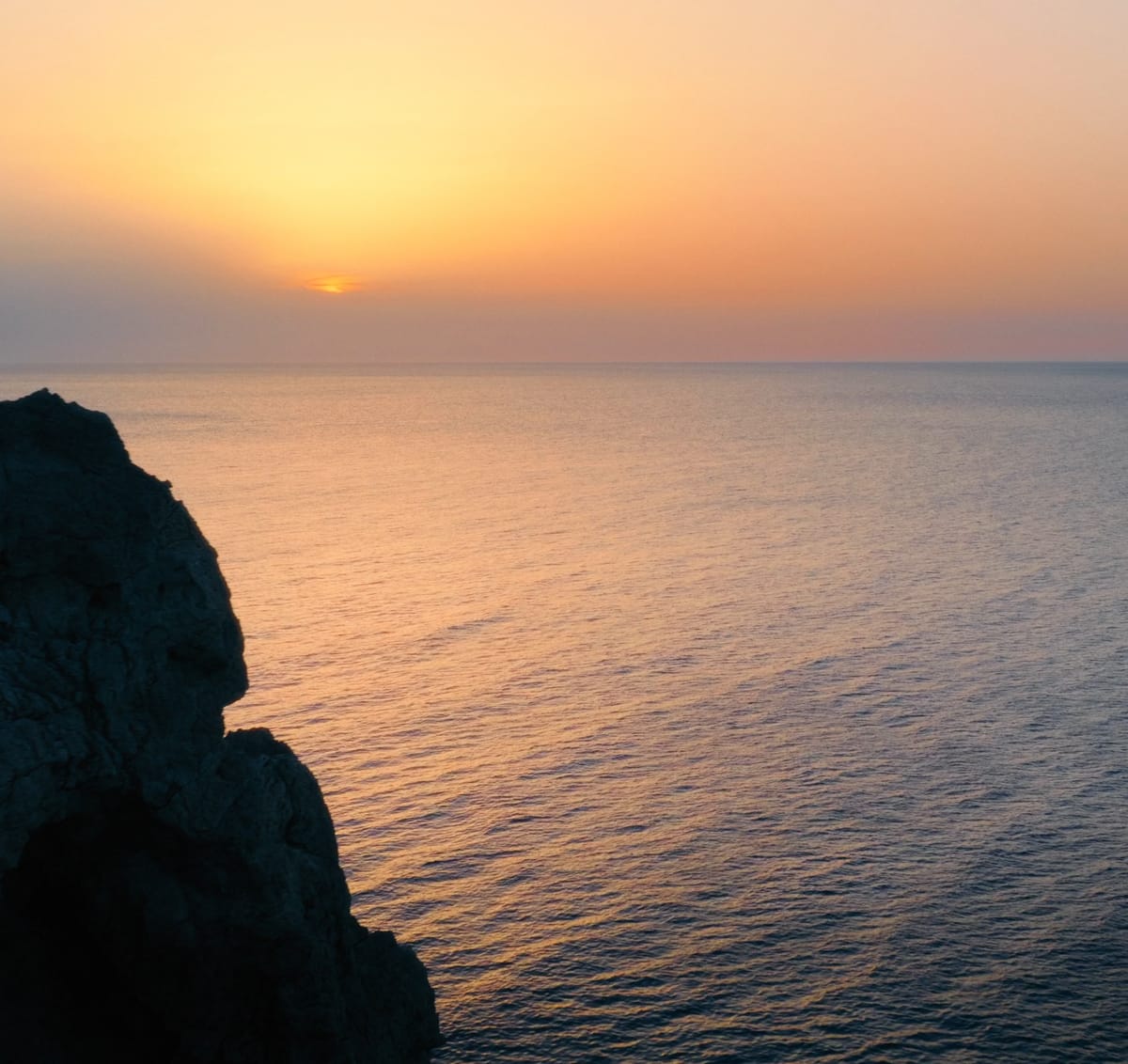
The sun setting over a calm sea beside a rocky coastline

A village on the estuary

Estero, Spanish for estuary, lies along the Estero River, which runs east to west through the Village into Estero Bay, and much of the Village sits only 5 to 10 feet above sea level. Estero Bay Aquatic Preserve, which borders the Village, was created in 1966 as Florida's first aquatic preserve. Estero voters approved incorporation with 86 percent on November 4, 2014, and the Village of Estero was officially created on December 31, 2014. The first Village Council was elected in March 2015.

A tree in white blossom in a garden, the light gray tower of a FREILUFT grill-and-fire element behind it

Pioneers on the river

In 1894, Cyrus Teed brought followers of the Koreshan Unity to Estero, where they settled along the Estero River and incorporated a first Town of Estero in 1904 that was abolished in 1907. In 1961 the last members deeded their land to the state, and today Koreshan State Park keeps 11 historic buildings dating from 1882 to 1920 in a district listed on the National Register of Historic Places.

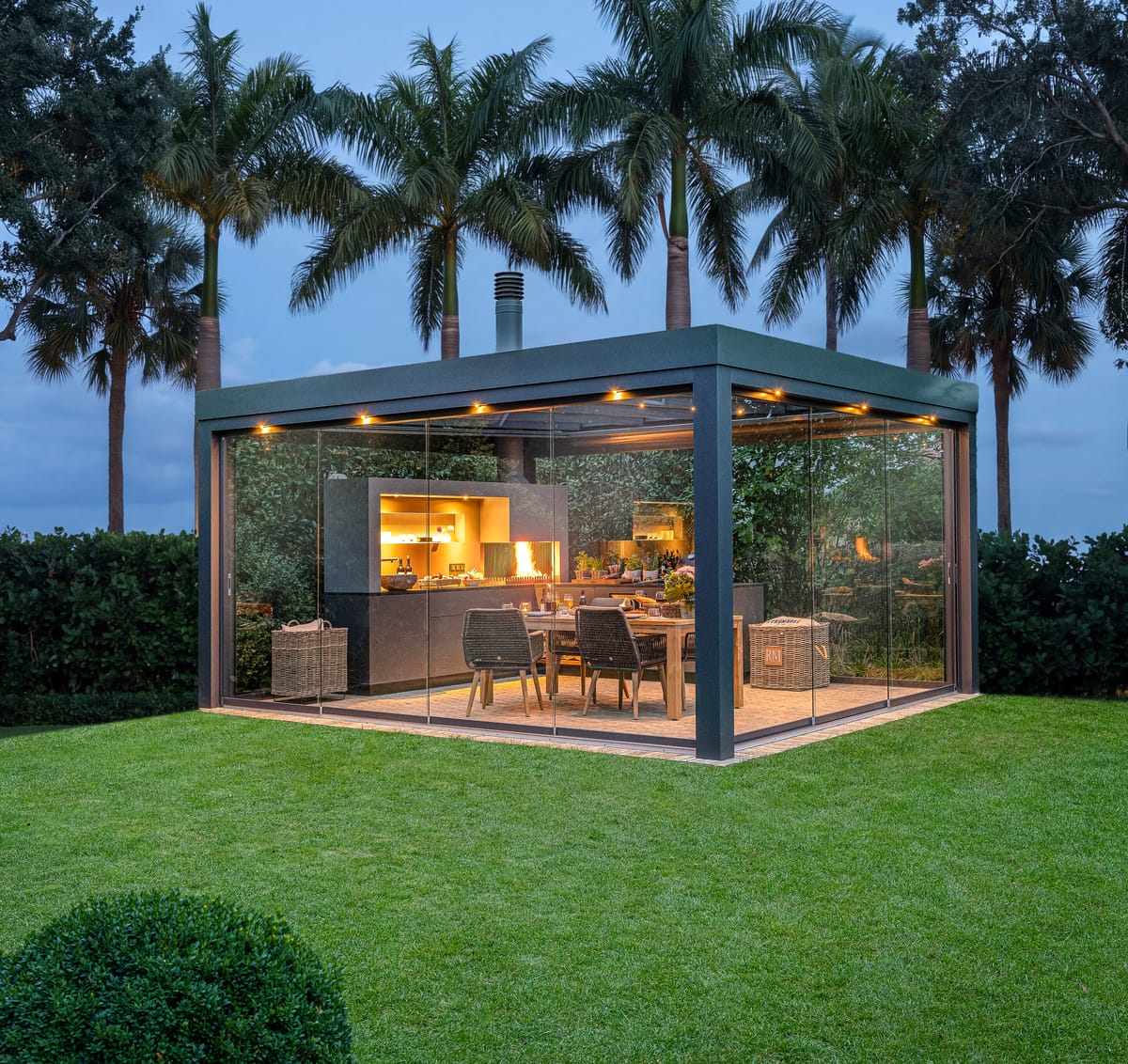
Glass-walled pergola in a garden at dusk with a lit outdoor kitchen, wood fire and dining table inside

Neighborhoods around the green

Estero is made up mainly of privately maintained single-family neighborhoods, and in many of its lower-density neighborhoods golf courses form the main open space. The 2020 Census counted 36,939 residents, and about 86 percent of occupied homes are owner-occupied. Estero's Planning, Zoning and Design Board reviews exterior alterations of buildings except single-family homes, and the Village's architectural design standards apply to commercial, multifamily and other non-single-family projects. Private deed restrictions and covenants still apply in addition to the code, but the Village does not monitor or enforce them.

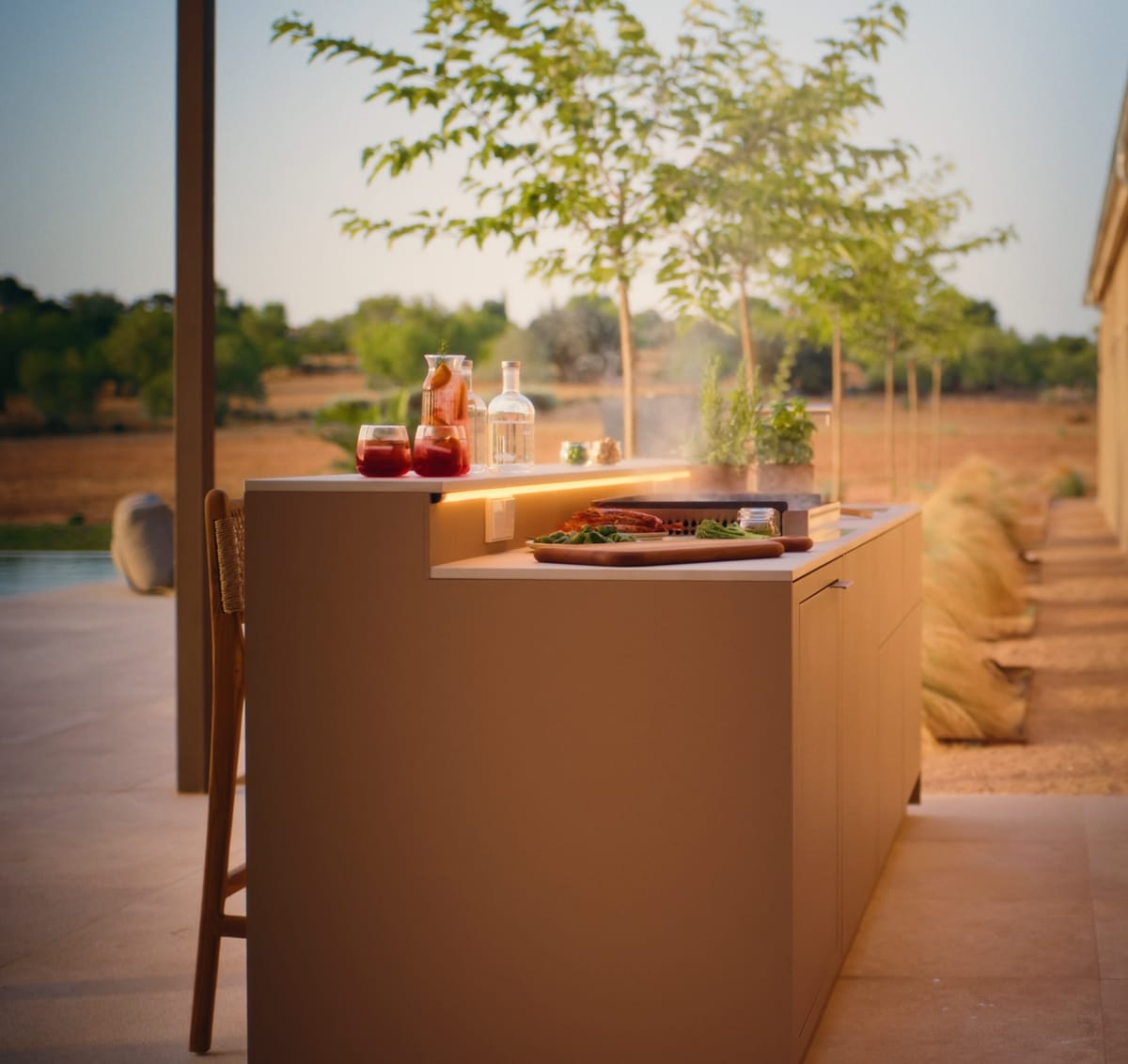
A sand-colored FREILUFT kitchen run along a stucco wall in evening light, drinks, herbs and a cutting board on the counter under a warm LED strip

The right spot on your lot

In Estero, an accessory structure may not be closer to the road than the house, must stay at least 5 feet from the rear property line unless a planned development's approval sets another distance, and may not sit in a recorded easement, over a known utility or in a required buffer. Accessory structures larger than 150 square feet need a drainage plan with the building permit application. In Estero's single-family (RSF) district, accessory structures need at least 20 or 25 feet from the street, 7.5 feet from the side and 5 feet from the rear lot line, and the district sets a waterbody setback of 25 feet from the edge of the water. In residential planned developments, lot setbacks are set in each development's master concept plan or adopting ordinance, with the same 25-foot waterbody setback. In Estero, pools, patios, decks and similar facilities may not rise more than three and a half feet above grade unless they meet the setbacks of the main building, and required setbacks must otherwise stay open from the ground to the sky. Patios, terraces and walkways less than 2 inches high may be placed in any required setback. The code does not name outdoor kitchens; how yours is classified, we clarify with the Village during planning.

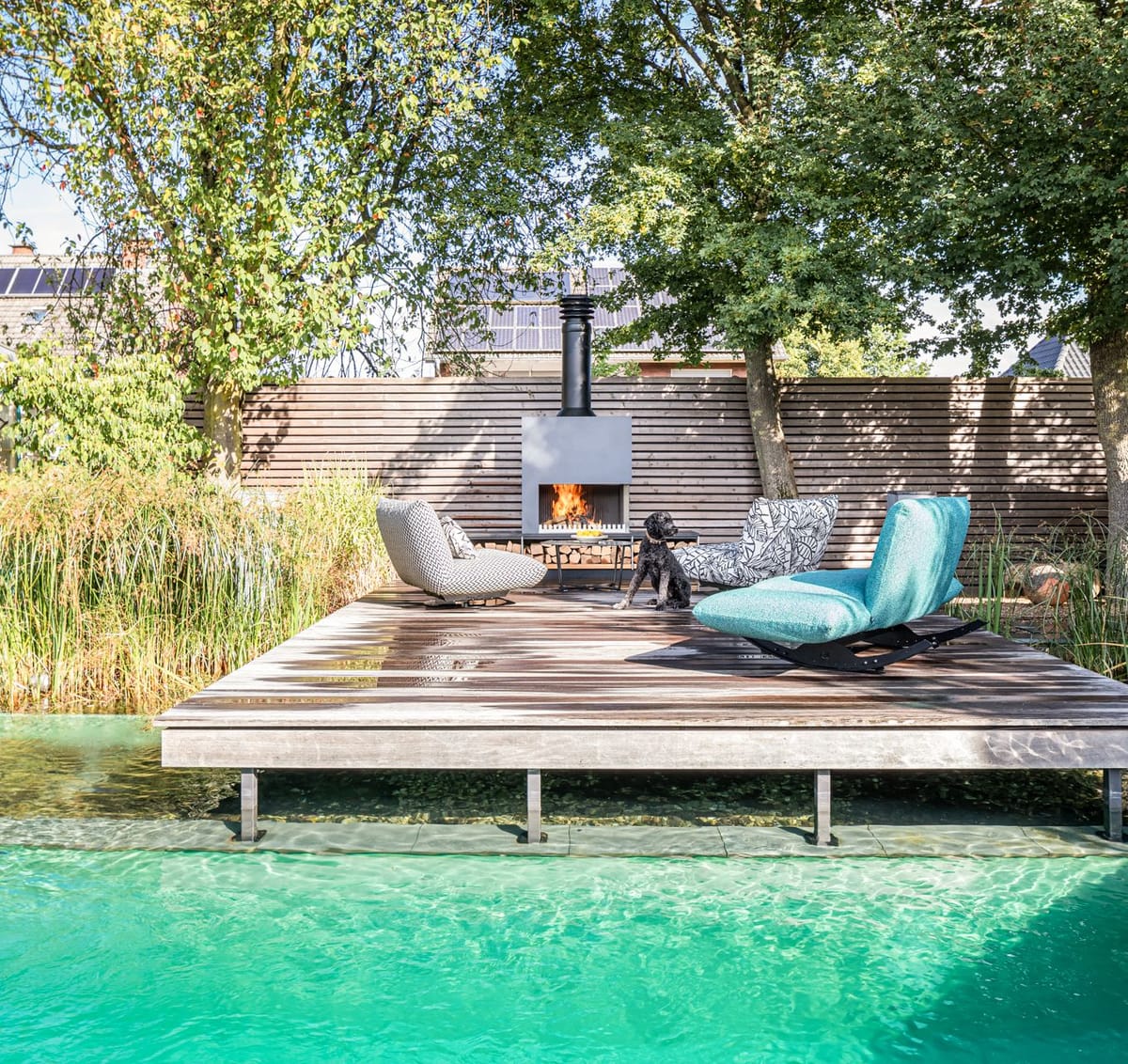
Wooden deck over a clear natural pool with lounge chairs around a freestanding wood-burning fireplace, dog on deck

Built for the flood zone

About 45 percent of the Village of Estero lies in a FEMA Special Flood Hazard Area, mapped as zones AE, VE and AH, and the Village applies the Lee County Flood Insurance Study effective November 17, 2022. FEMA issued preliminary revised flood maps for Lee County, including Estero, dated July 25, 2024. Estero requires new construction and substantial improvements to be built at least one foot above the base flood elevation, and in flood zone X the livable floor must be one foot above the crown of the road. Any development in a flood hazard area needs a floodplain permit or approval, including structures that are exempt from the Florida Building Code. In Estero's flood hazard areas, development without its own specific rule must be anchored against flotation, built of flood damage-resistant materials and have its mechanical, plumbing and electrical systems above the design flood elevation, apart from minimum electric service for wet locations. In coastal high hazard zones (V), concrete patio slabs must be structurally independent, unreinforced, frangible and no more than 4 inches thick, and above-ground tanks must be elevated. The National Hurricane Center puts the maximum storm surge inundation during Hurricane Ian in September 2022 at 8 to 12 feet above ground in Estero. According to the Village, flooding was concentrated west of US 41 and along the Estero River and Halfway Creek, while wind damaged roofs, lanais and pool enclosures throughout the Village.

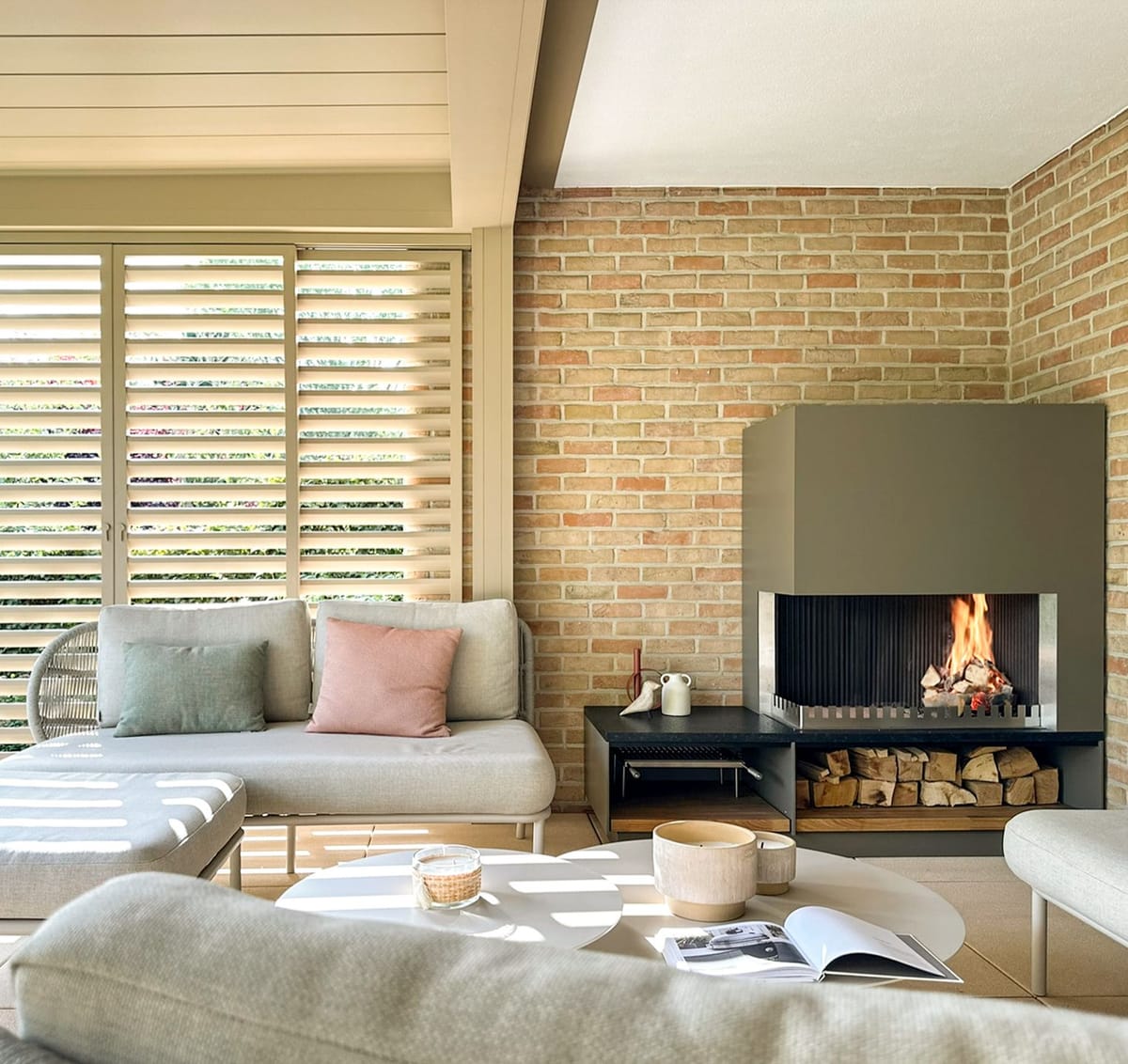
Covered lounge with light sofas, round tables and a wood fire burning in a gray steel fireplace unit with log storage

Permits from the Village

Within the Village of Estero, building permits come from the Village itself, whose Building & Permitting Services reviews residential and commercial applications under Village rules and Florida law, and contractors and subcontractors must register with the Village. Elevation certificates for structures built before May 9, 2016 are kept by Lee County. In Estero, installing or changing any electrical, gas, mechanical or plumbing system regulated by the Florida Building Code requires a Village building permit, and the Village lists propane tanks above and below ground and gas piping as permit items for homes. A garden trellis under 200 square feet and 12 feet high is exempt, but only without electrical or plumbing work. If repairs or improvements equal or exceed 50 percent of a building's market value, Estero requires the building to meet current flood rules, and market value covers the structure only, based on Lee County Property Appraiser data or an independent appraisal. Landscaping, fences, driveways and detached garages, pools, sheds or gazebos do not count toward the 50 percent.

Learn more : Permits from the Village

04 Starting points

Starting points for Estero

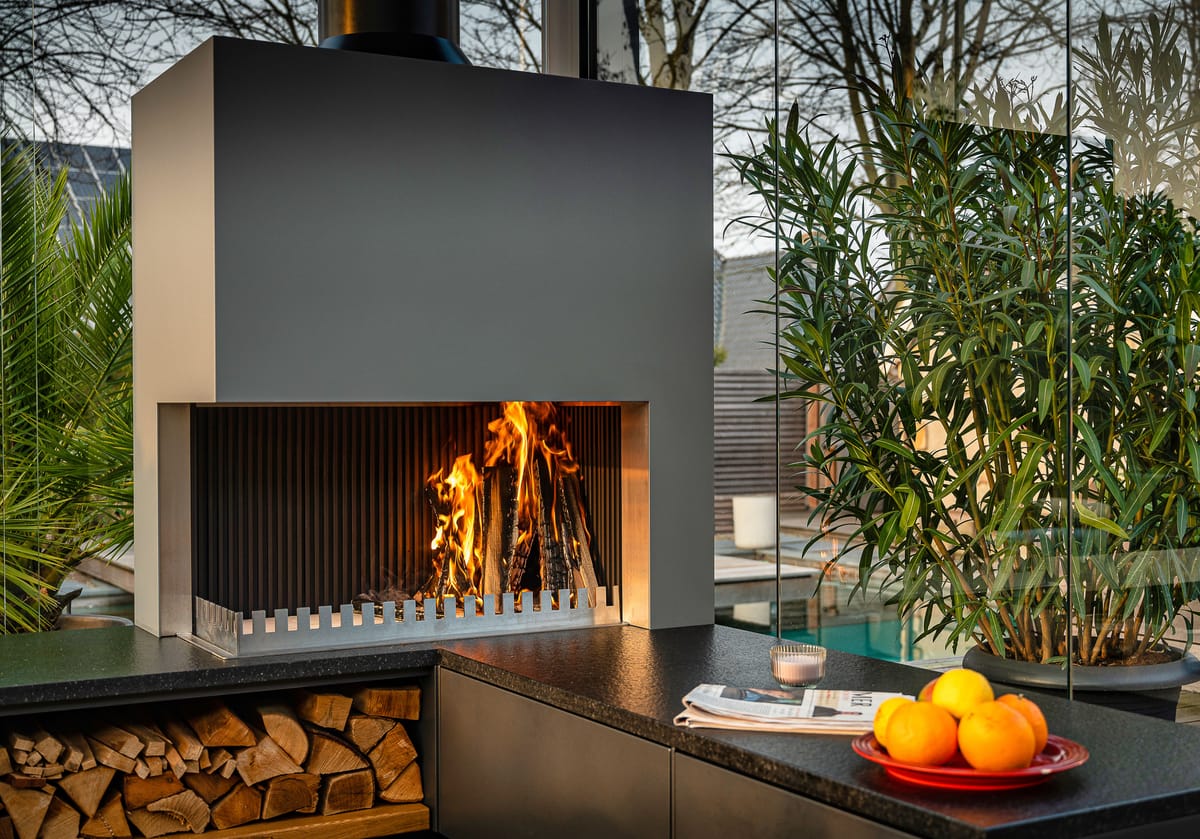
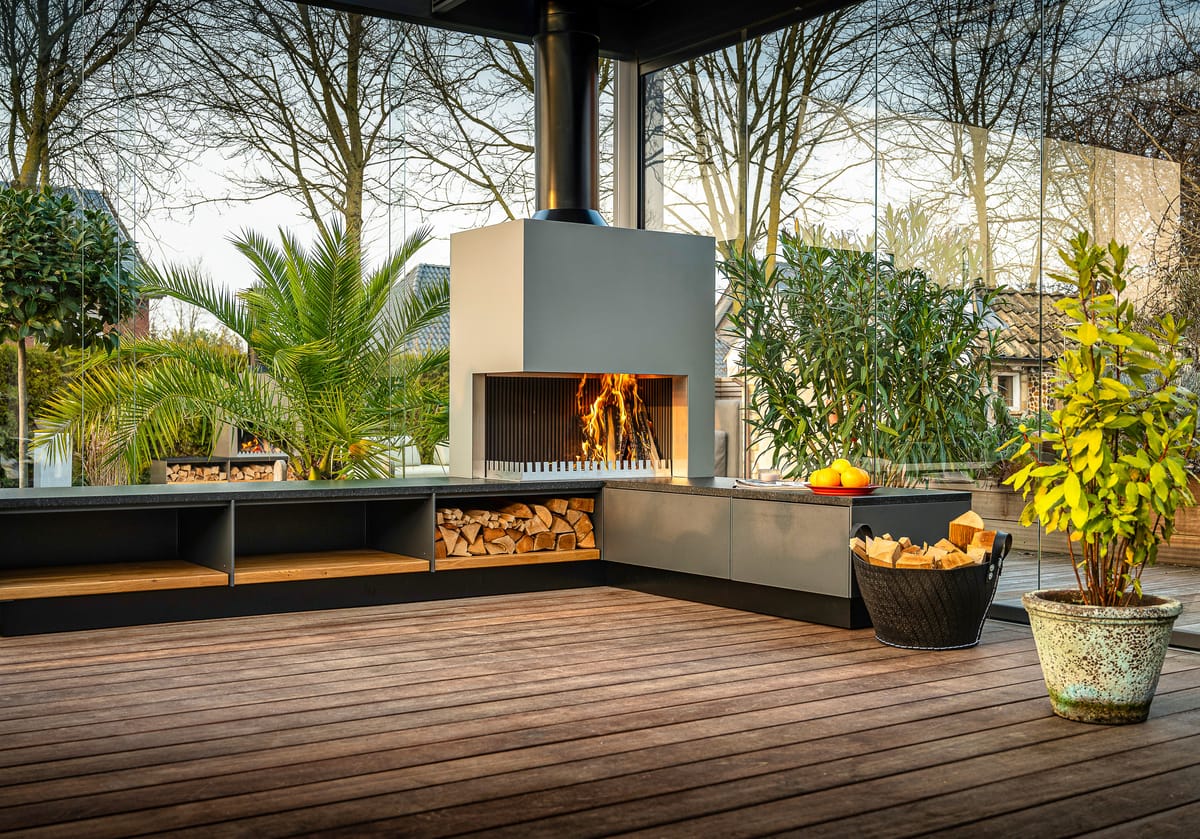
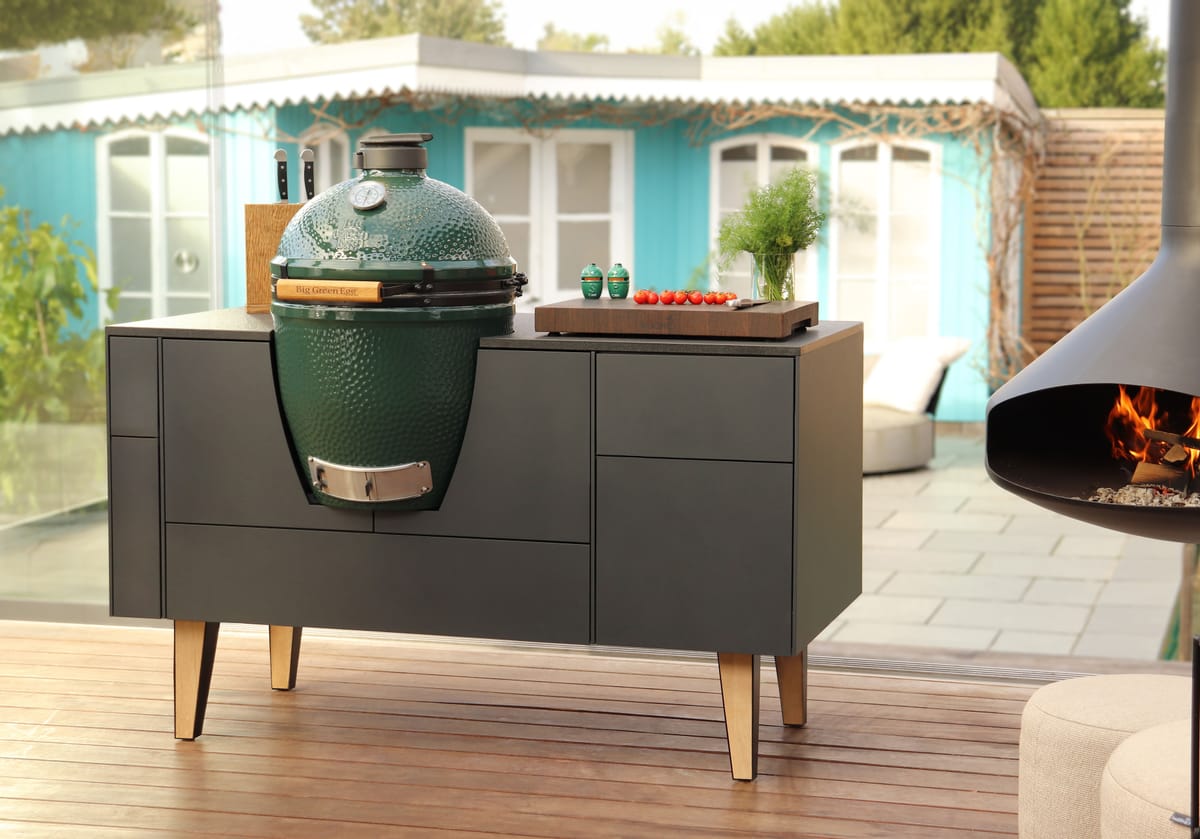
Four layouts to start from in an Estero garden by the lake, the river or the green. The photos show FREILUFT kitchens in Europe, not projects in Estero. We plan and supply kitchens throughout Estero, in Bonita Springs and across Lee County. For ideas, start with our built-in outdoor kitchens, the wood-fired grill and the aluminum outdoor kitchen cabinets.

Questions about Estero, FL

Frequently asked questions

Within the Village of Estero, building permits come from the Village itself, whose Building & Permitting Services reviews residential and commercial applications under Village rules and Florida law, and contractors and subcontractors must register with the Village. Elevation certificates for structures built before May 9, 2016 are kept by Lee County. In Estero, installing or changing any electrical, gas, mechanical or plumbing system regulated by the Florida Building Code requires a Village building permit, and the Village lists propane tanks above and below ground and gas piping as permit items for homes. A garden trellis under 200 square feet and 12 feet high is exempt, but only without electrical or plumbing work. We prepare the documents with licensed partners.

Your kitchen in Estero

A kitchen for your garden in Estero, set for the water level of your lot and made to order in Germany. One contact stays with you to handover.

Plan your kitchen for Estero

Tell us about your community and what it asks of a garden project. We reply personally within one business day.

Step 1 of 3
  1. About you
  2. Your project
  3. Timing and scope
About you

Five digits. We use it to plan delivery and the right contractors for your area.

  • Made to order
  • Planned for your flood zone
  • Planned in Florida
  • Warranty by Ensch Outdoor Living LLC

Request a Design Consultation