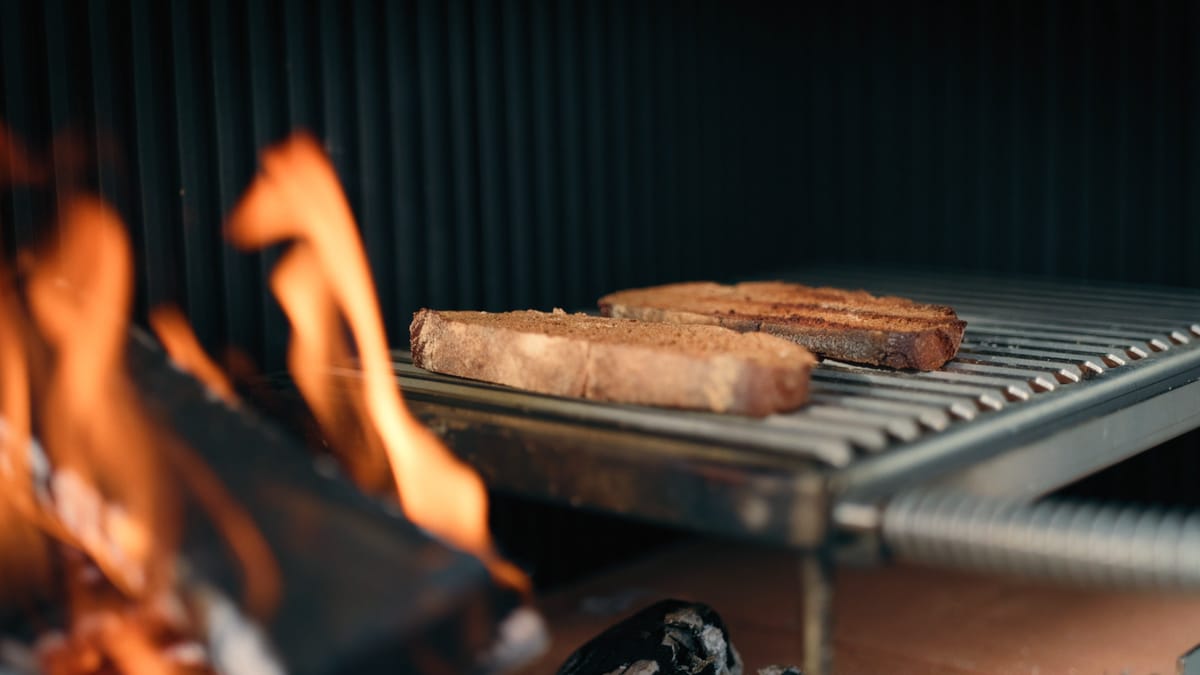
Sausages on a stainless grill grate above a burning wood fire
Guide · Fire

Gas vs. charcoal grill, or a wood fire?

Three ways to cook outdoors, each with its own strengths. This guide compares them by criteria, not by rank, for an outdoor kitchen in South Florida.

01 The short answer

Gas vs. charcoal grill: the short answer

Gas vs. charcoal grill is the classic question, and a wood fire is the third answer. Gas is ready quickly and easy to adjust. Charcoal does well at slow, indirect cooking. A wood fire gives you flames, embers and a place to gather. None of them is right for everyone.

Many outdoor kitchens combine them. A FREILUFT kitchen is planned around a real wood fire, and a built-in gas grill or a kamado can stand in the same kitchen. We plan and supply these kitchens in South Florida.

02 Three fuels

Gas, charcoal and wood, side by side

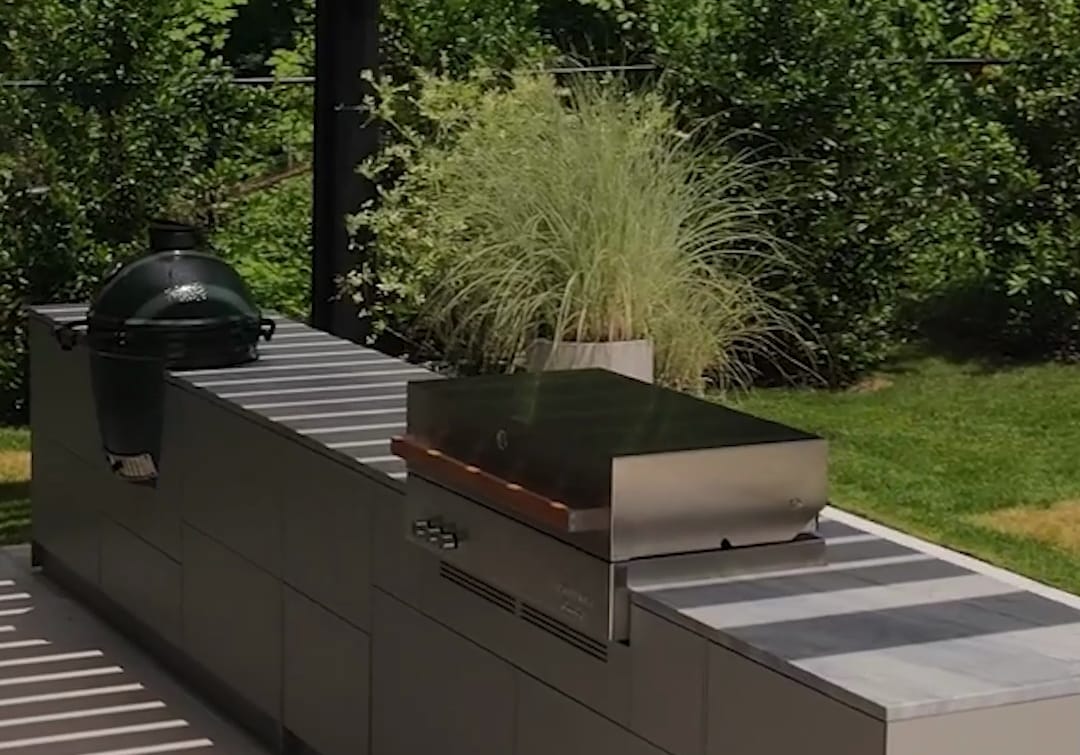
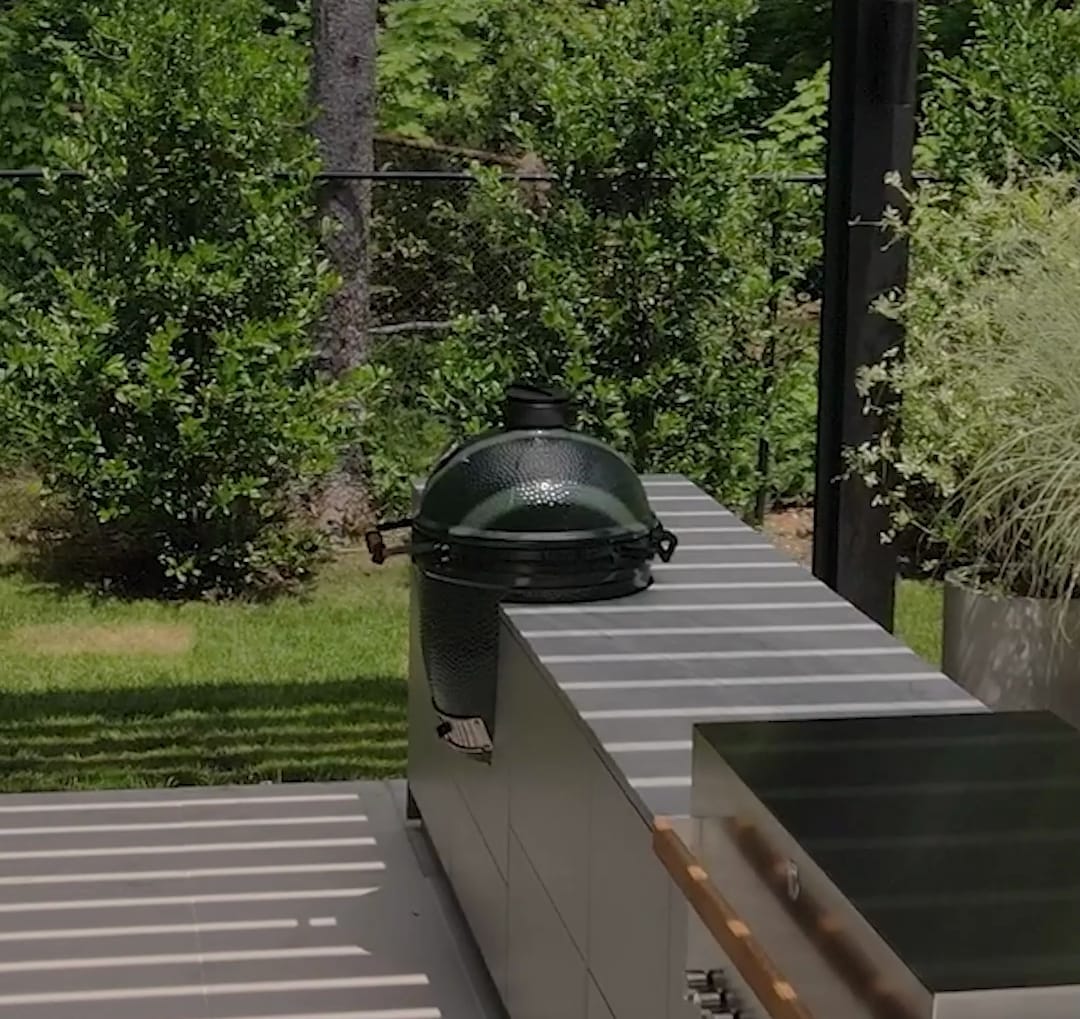
A Big Green Egg set into the stone worktop of a FREILUFT kitchen run, next to a built-in grill, under a louvered pergola

Gas: propane or natural gas

Propane is a gas that turns liquid under pressure and is stored in pressurized containers such as a grill cylinder or tank, while natural gas reaches homes through mains and service lines. In Florida, installing natural gas and liquefied petroleum gas lines is part of the licensed scope of a plumbing contractor, and a mechanical contractor's scope covers such fuel lines within buildings. In a FREILUFT kitchen, the gas grill sits in appliance cabinets 47 1/4 or 63 in (1200 or 1600 mm) wide with holders for a built-in or a top-mounted gas grill.
Learn more : Gas: propane or natural gas
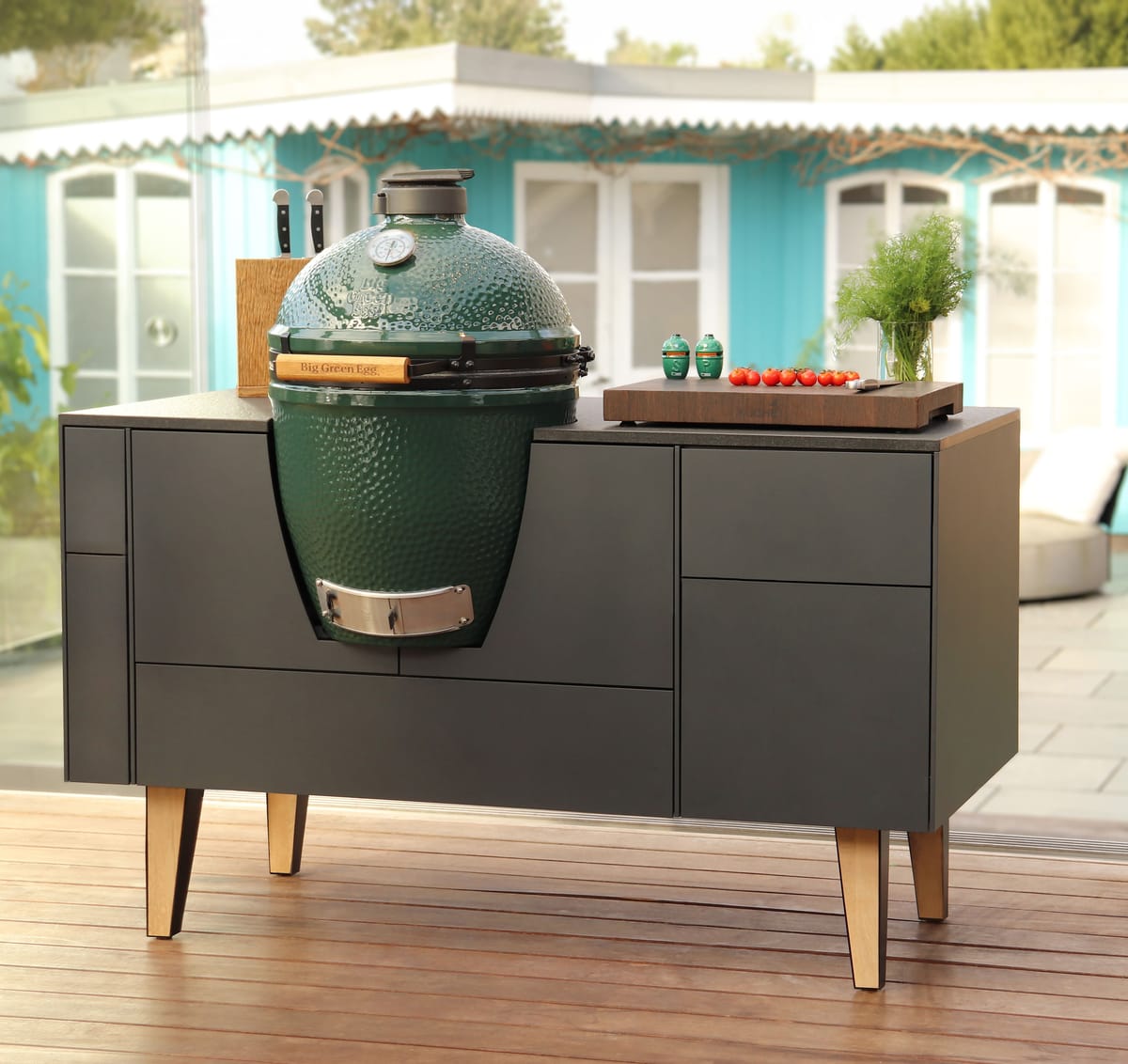
FREILUFT island with anthracite fronts, oak legs and a built-in Big Green Egg on a wooden deck, hanging fireplace

Charcoal and the kamado

Grilling cooks food over direct heat and suits tender cuts; smoking cooks food indirectly in the presence of a fire and much more slowly, which benefits less-tender cuts. A kamado on charcoal is made for the slow side. The modular system has kamado holders for medium to large and for extra-large kamados, each built into a 31 1/2 in (800 mm) cabinet, and there is also an Island variant that holds a Big Green Egg kamado.

Learn more : Charcoal and the kamado
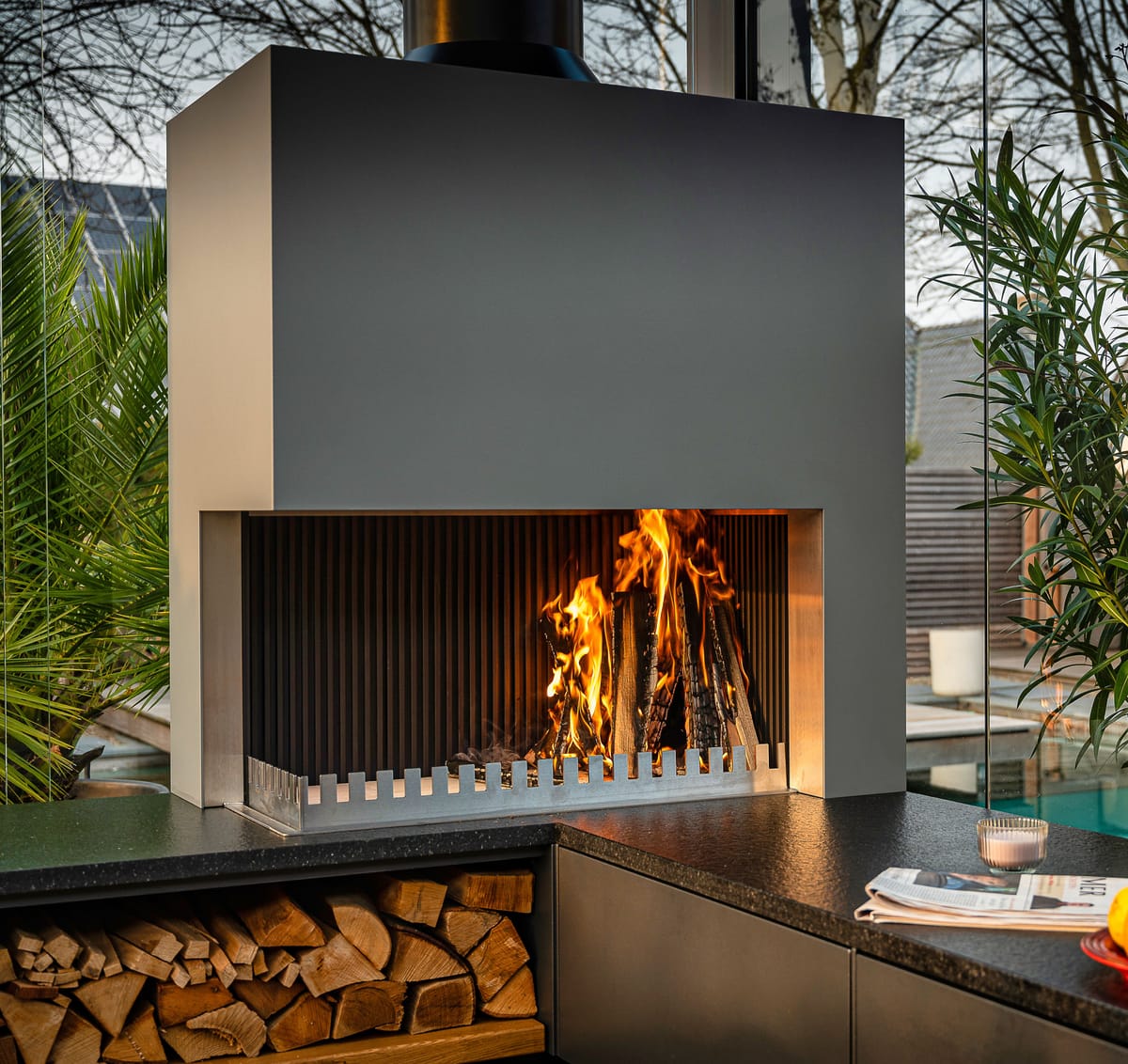
Close-up of a wood fire in the grill-and-fire element above a dark flamed stone countertop with oranges

A real wood fire

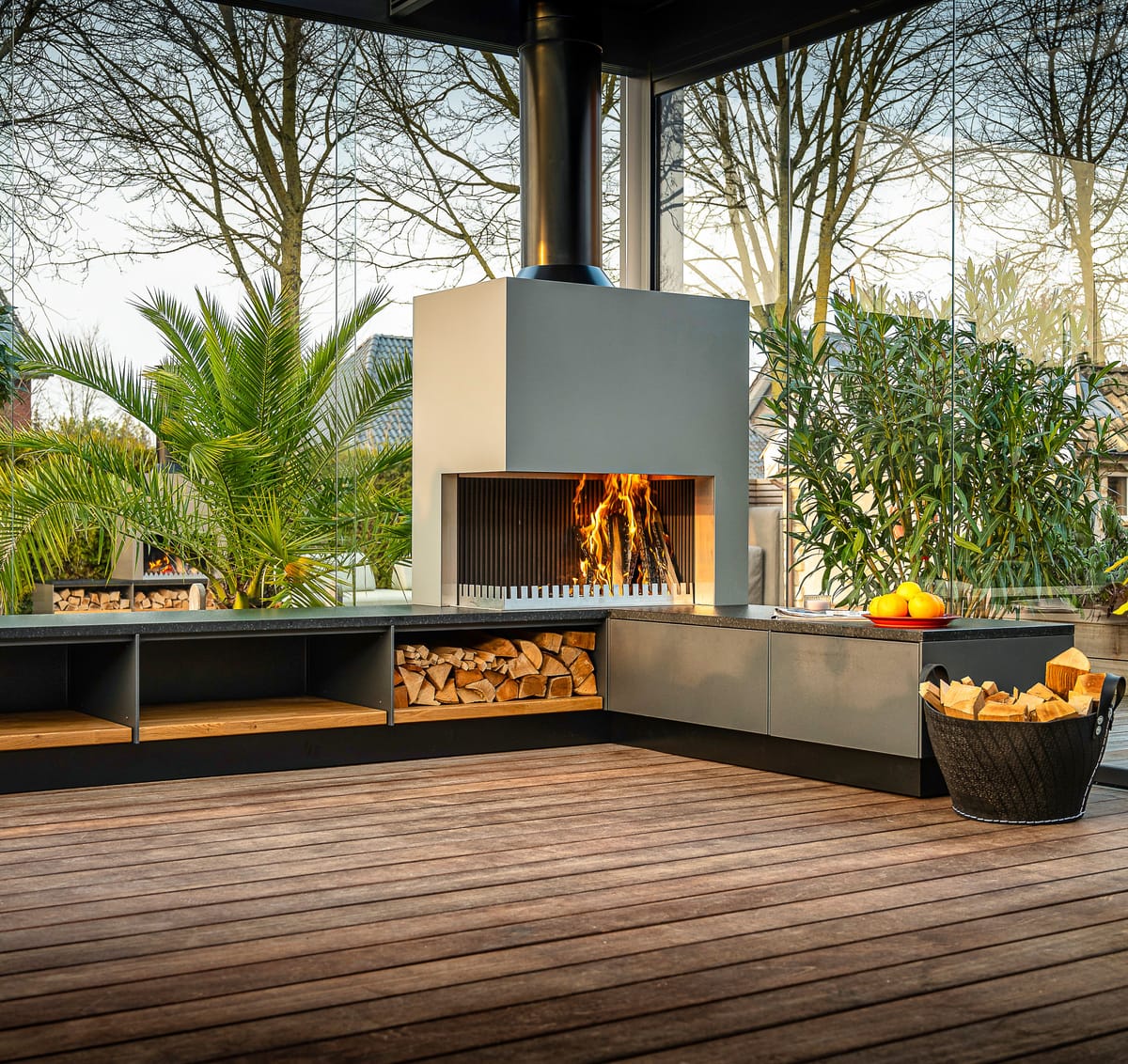
The fire burns in a grill-and-fire element built from stainless steel, cast iron and firebrick, with an aluminum hood powder-coated in your chosen color, an ember guard and a grill grate. Plan on 4.4 to 8.8 lb (2 to 4 kg) of firewood per fire, and use properly dried firewood with no more than 15% residual moisture. For pizza and bread there is a wood-fired oven, 31 1/2 in (800 mm) wide, with a stainless steel baking chamber and a glass door.

Learn more : A real wood fire
Gray outdoor kitchen with a wood fire in the grill-and-fire element, firewood bench and a potted palm on a deck

All three in one kitchen

Gas for a quick weeknight, charcoal for a slow afternoon, wood for an evening with guests. Fire, kamado and gas grill can be planned into one layout. Every grill-and-fire element and the wood-fired oven need a draw tube, and under a roof or covering a roof duct is required. Clearances, the draw tube and gas lines are settled with licensed partners.

Learn more : All three in one kitchen

03 Safety

Every fire, safely at home

Whatever the fuel, the same few rules keep the fire where it belongs. These are the points we plan with you.

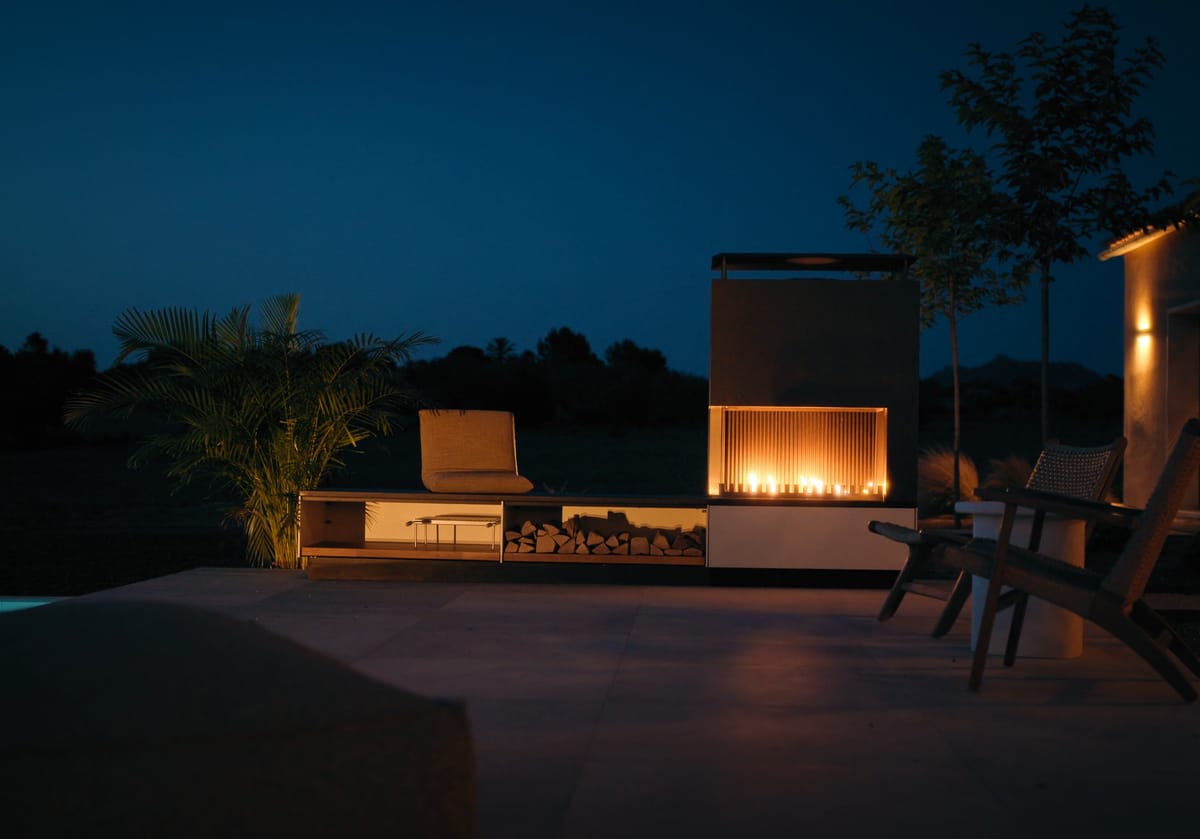
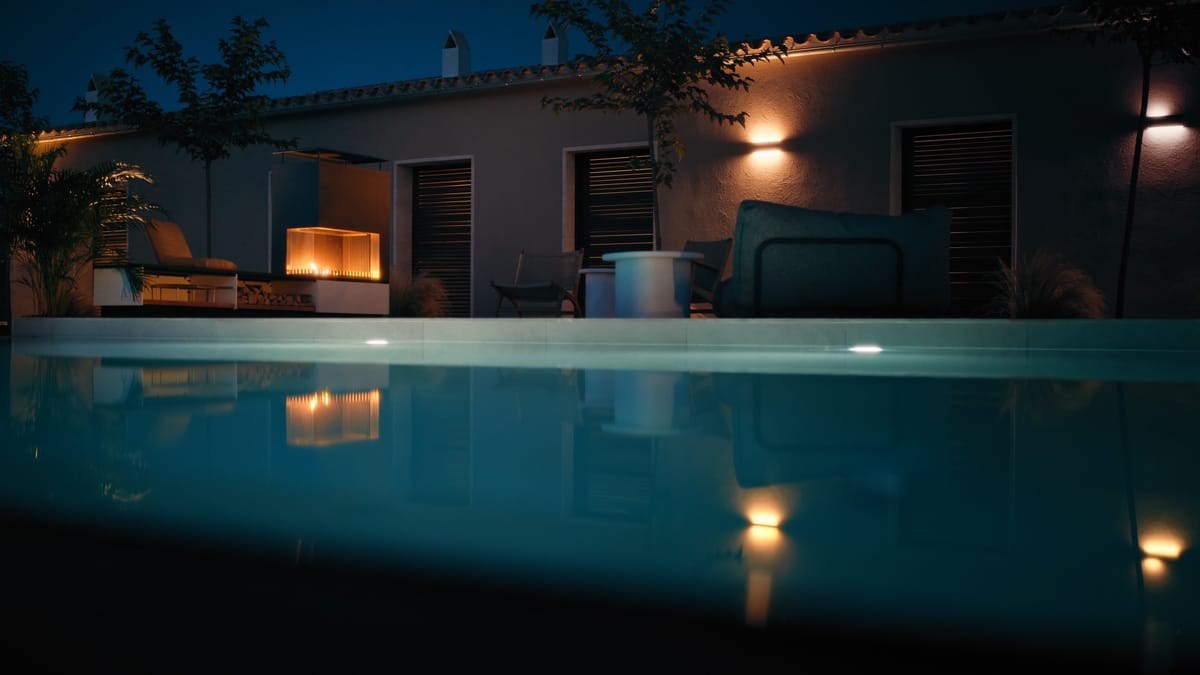
  • A fire burning in a light outdoor fireplace on a terrace beside a pool at night, lounge chairs in front of it
    01 Outdoors only

    Gas and charcoal grills can cause a fire or carbon monoxide poisoning, so they are used outdoors only, in a well-ventilated area, and never indoors, in a garage, breezeway or carport, on a porch or under a surface that can burn. During a power outage, grills and other propane- or charcoal-burning devices are never used inside the home, garage or carport, or near doors, windows or vents.

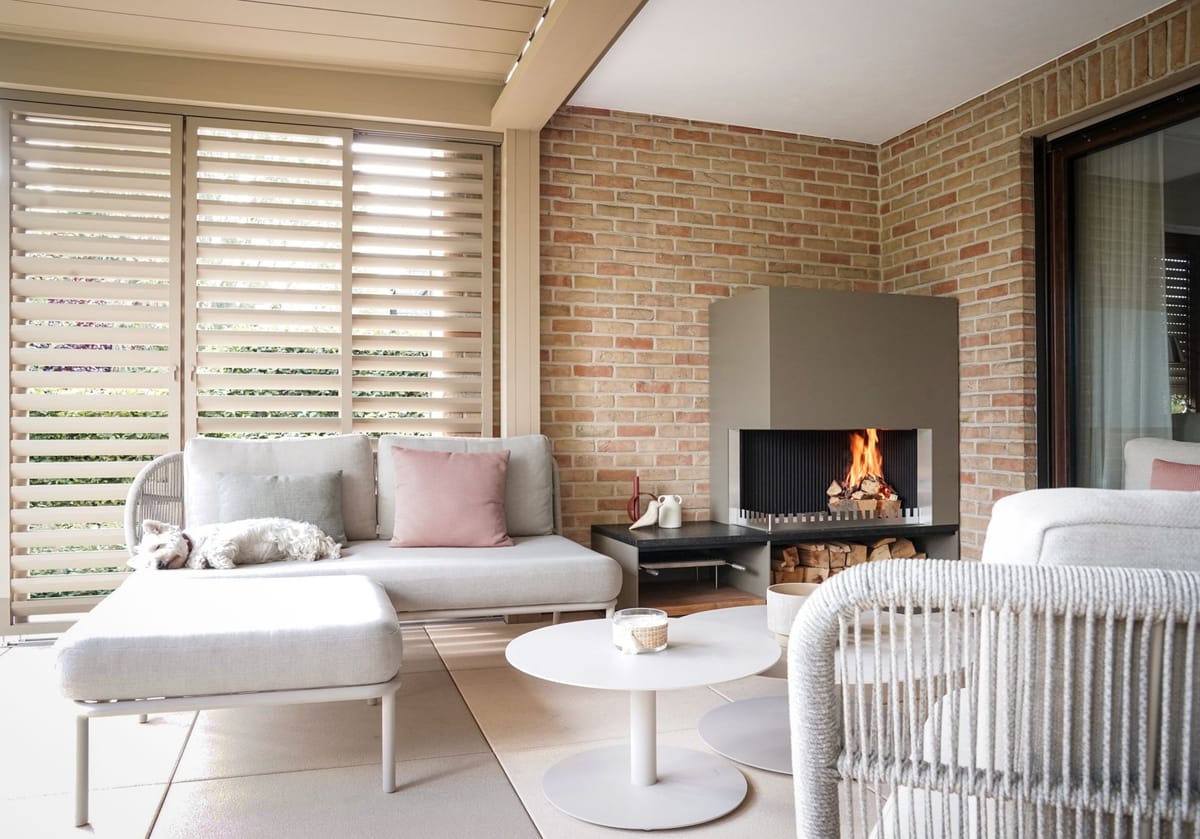
  • Covered lounge with louvered roof, sofas, round tables and a wood fire in a steel fireplace unit, dog on the sofa
    02 Where the fire stands

    A grill stands well away from the house and deck railings and out from under eaves and overhanging branches, at least 3 feet (about 1 m) from siding, rails and eaves. It is never left unattended while in use, and children and pets stay at least 3 feet away. The manufacturer specifies a minimum clearance of 11 13/16 in (30 cm) to adjacent building elements; local fire codes in Florida are reviewed during planning.

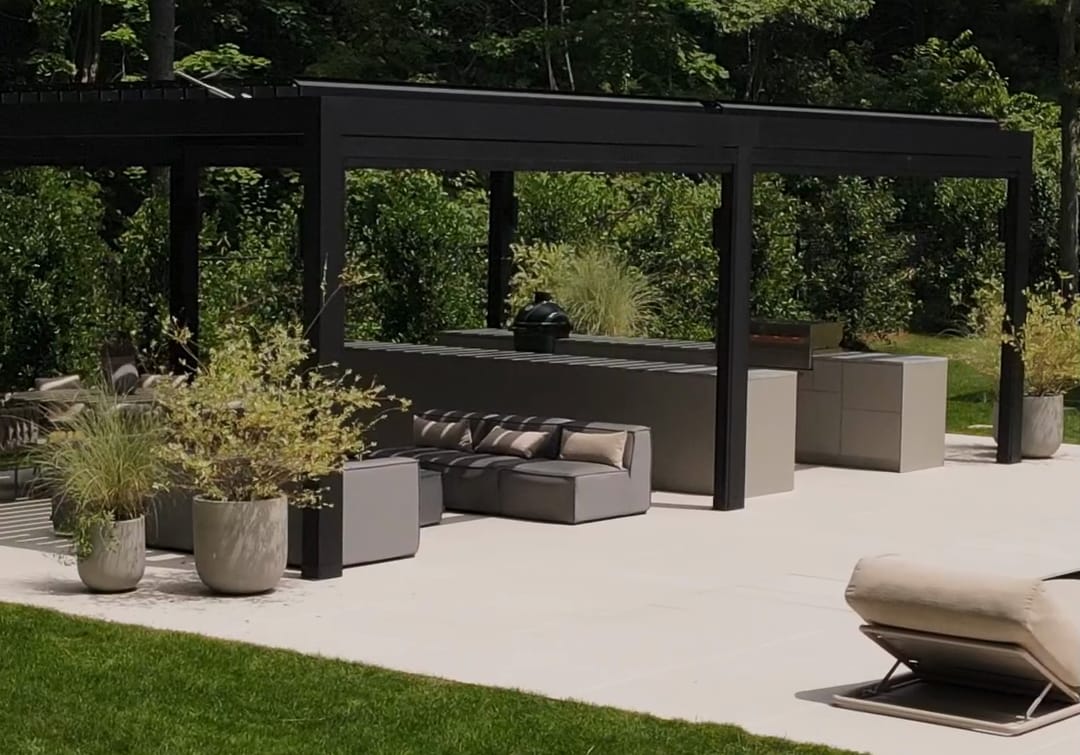
  • A long gray FREILUFT kitchen run with a Big Green Egg and a built-in grill under a black louvered pergola on Long Island, New York
    03 Propane

    Under the Florida Fire Prevention Code, propane containers are kept outside buildings. Inside a home, including an attached or detached garage, only small cylinders of up to 2.7 lb (1.2 kg) water capacity each are allowed, so a regular grill cylinder is stored outdoors. Before a propane grill is used for the season, the tank, hose, regulator and burner connections are checked with soapy water while the gas is on; bubbles mean a leak, and the cylinder is turned off at once. The lid of a gas grill stays open while it is lit.

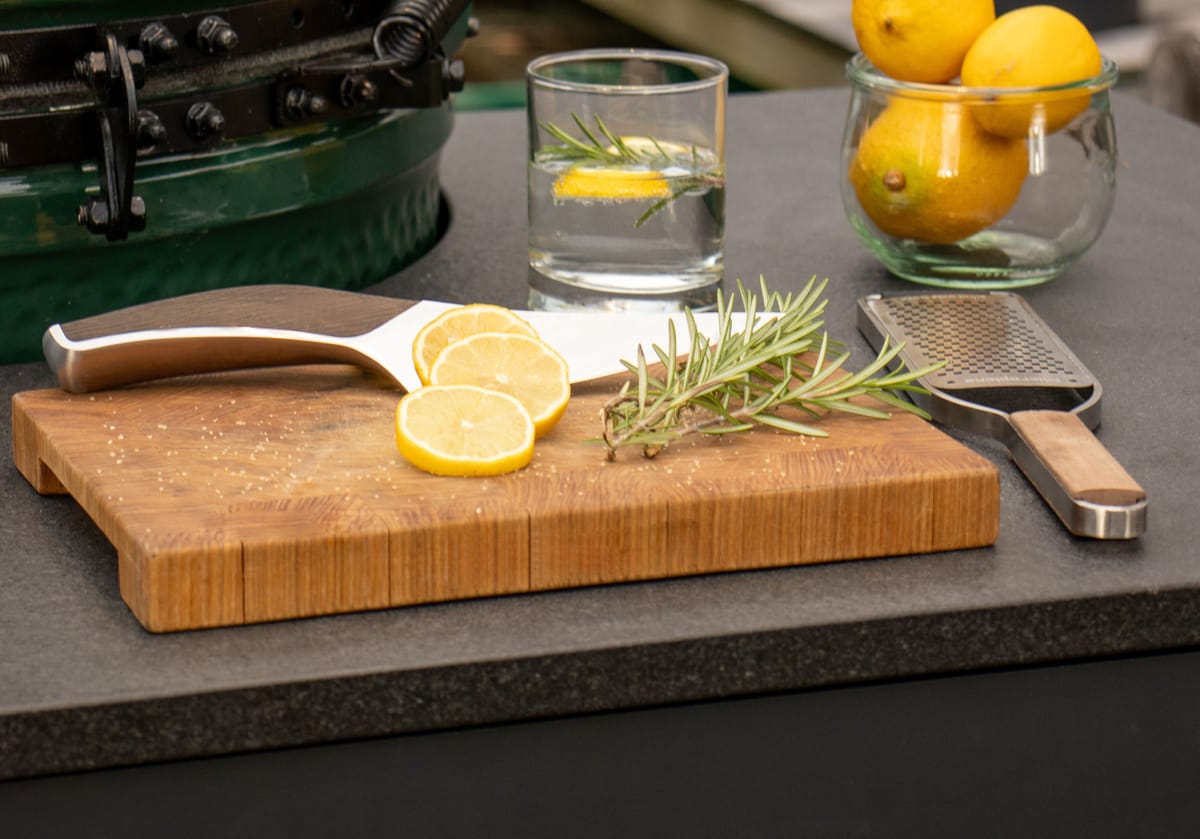
  • Big Green Egg set into a dark stone island countertop, lemon slices, rosemary and a grater on an end-grain board
    04 Charcoal and ash

    Charcoal is lit with a chimney starter or with charcoal lighter fluid only. Lighter fluid is never added to coals that are already burning, and gasoline or other flammable liquids are never used. Coals and ashes are left to cool completely and then emptied into a metal container with a tight-fitting lid that is used only for that purpose and kept outdoors on a nonflammable surface, away from anything that can burn, never into a trash can.

  • A black louvered pergola with a lounge and FREILUFT kitchen runs, seen from the lawn of a garden on Long Island, New York
    05 Condos and rooftops

    Under the Florida Fire Prevention Code, at buildings other than one- and two-family homes, no grill may be used on a balcony, under an overhang or within 10 feet (3 m) of the structure, or stored on a balcony. Listed equipment permanently installed according to its listing, applicable codes and the manufacturer's instructions is permitted, as are listed electric tabletop grills up to 200 square inches. We check the rules for your building during planning.

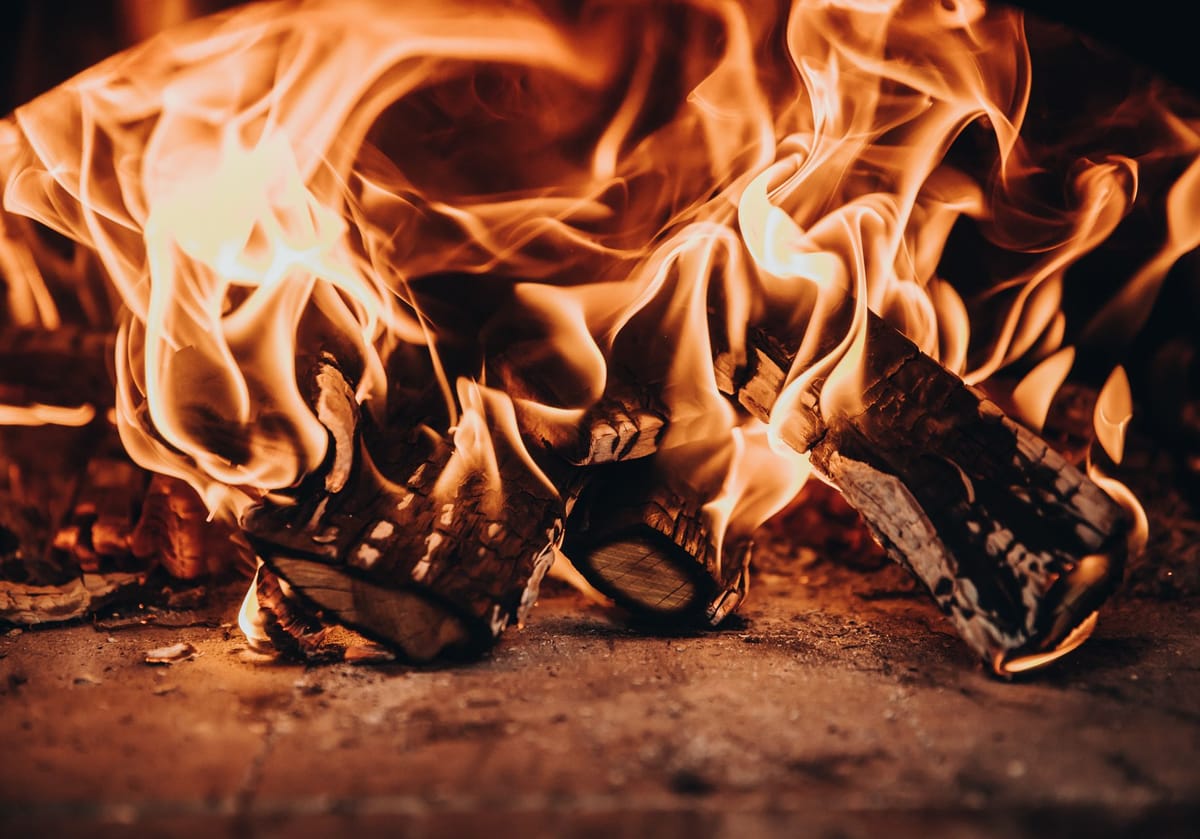
  • Close-up of burning logs with tall flames on a stone hearth
    06 Which wood

    Firewood for cooking should be dry, split and well seasoned, with a moisture content below 20 percent. Seasoning takes at least six months, with the wood stored outdoors, off the ground and covered only from above. Painted, coated or pressure-treated wood, plywood, particle board, ocean driftwood and household trash do not belong in a cooking fire, because they can release toxic or harmful chemicals. Florida prohibits the open burning of treated wood, plastics, garbage and trash.

04 In short

The fuel follows the way you cook, and the plan follows the fuel.

05 At a glance

Gas, charcoal and wood fire at a glance

No ranking. Each column stands on its own. For the materials around the fire, see stainless steel vs. aluminum, and for questions to ask every supplier, see how to compare outdoor kitchen brands.

Gas Charcoal Wood fire
Lighting Push-button ignition with the lid open A chimney starter or charcoal lighter fluid Dry kindling, then flames and embers
Heat Direct heat, easy to adjust Direct grilling or slow, indirect cooking Flames and embers, radiant heat in the oven
Ready Quickly Once the coals glow Once the fire burns down to embers
Fuel A propane cylinder stored outdoors, or a natural gas line Charcoal, stored dry Seasoned wood below 20 percent moisture
Safety A leak test with soapy water before the season Outdoors only, ash cold into a metal can Never unattended, ash cold into a metal can
Connections A gas line by a licensed contractor, with a permit None A draw tube, and a roof duct under a roof
Cleaning Grease from grates and trays Grease and cold ash Cold ash and the grate

Questions about gas, charcoal and wood

Frequently asked questions

Neither is better for everyone. Grilling cooks food over direct heat and suits tender cuts; smoking cooks food indirectly in the presence of a fire and much more slowly, which benefits less-tender cuts. Gas starts quickly and is easy to adjust, while charcoal suits slow cooking on a kamado.

Plan the fire with the kitchen

Tell us how you like to cook. We plan gas, charcoal and wood fire with the layout, the clearances and the local code.

How do you like to cook?

Tell us where your kitchen will stand and which fire you have in mind. We reply personally within one business day.

Step 1 of 3
  1. About you
  2. Your project
  3. Timing and scope
About you

Five digits. We use it to check whether we currently build in your area.

Request a Design Consultation